Traditional Texas BBQ Sides

The Classics That Balance Brisket, Ribs, and Smoke

Traditional Texas BBQ sides are simple, hearty dishes designed to balance slow-smoked meats. The most common include pinto beans, potato salad, coleslaw, mac and cheese, white bread, pickles, and onions. These sides are not meant to compete with brisket or ribs. Instead, they cool the palate, absorb rendered juices, and provide contrast to the deep smoke and fat of hardwood-cooked meats.

Texas barbecue is built around the pit. The meat carries the smoke, the bark, and the long hours of fire management. Sides exist to support that experience, not to steal focus from it.

When brisket is smoked for 18–24 hours over oak and mesquite, it develops richness from rendered fat and collagen. Beef ribs bring depth. Sausage delivers snap and spice. Without contrast, the meal turns heavy fast. Traditional sides introduce balance through acidity, creaminess, starch, crunch, and just enough brightness to reset your mouth between bites.

What Defines a Traditional Texas BBQ Side?

Traditional Texas BBQ sides share a few traits that show up again and again across classic smokehouses and meat markets. They are practical foods built to move quickly across a counter, hold up on a tray, and pair with beef that has been exposed to hardwood fire for an entire day.

Unlike some regional barbecue traditions that lean into sweeter baked casseroles or sauce-driven sides, Texas tends to keep things straightforward. Even when a side is creamy or cheesy, it is meant to calm the palate and support the meat rather than distract from it.

A good Texas side does three things. It absorbs juices, it refreshes the mouth, and it gives the tray a rhythm so the richness of brisket stays enjoyable from the first bite to the last.

Pinto Beans

Pinto beans are one of the most traditional Texas barbecue sides, and they are traditional for a reason. They belong on a brisket tray the way smoke belongs in the pit, because they match the pace and flavor of slow-cooked beef.

Texas-style pinto beans are typically cooked with onions, salt, black pepper, and sometimes brisket trimmings or drippings. The goal is not sweetness. The goal is a savory, steady flavor that feels like the smokehouse itself.

On the plate, beans do important work. When brisket juices mix into the bowl, smoky fat enriches the broth and turns a simple side into something layered. Beans also stretch a meal without making it feel heavier, which matters when brisket point and beef ribs already bring richness.

Potato Salad

Potato salad is the quiet workhorse of the Texas tray. It does not need to be dramatic because its job is functional: it cuts through richness without fighting smoke.

Texas BBQ potato salad is often mustard-based rather than sweet. The potatoes stay tender but structured, coated in dressing that commonly includes mustard, mayonnaise, vinegar, salt, and black pepper, sometimes with onion or relish for brightness.

The acidity matters. After a bite of brisket point, where rendered fat can coat the mouth, mustard and vinegar reset the palate. The starch absorbs juices while the tang keeps the next bite feeling fresh instead of heavy.

Coleslaw

Coleslaw brings something smoked meat cannot: crunch. In a meal dominated by collagen, rendered fat, and tender slices, slaw adds a crisp bite that keeps the tray from feeling one-note.

Texas-style slaw usually avoids excessive sugar. Whether it is vinegar-forward or lightly creamy, the goal is brightness and balance. The cabbage should stay crisp, and the dressing should lift the vegetables instead of burying them.

A forkful of slaw between bites of beef ribs acts like a reset button. Acidity cuts through fat, crunch breaks up softness, and the mild vegetable flavor keeps the meat feeling like the centerpiece.

Mac and Cheese

Mac and cheese appears on many Texas barbecue menus, but it plays a different role than beans or slaw. It does not refresh the palate. It adds comfort and softness alongside smoky, peppery meat.

Done well, mac and cheese provides a mild, creamy contrast to bark and smoke. Done poorly, it becomes the loudest thing on the tray and competes with brisket instead of supporting it.

The best smokehouse mac and cheese is creamy without being overly sharp. The sauce stays smooth and balanced, and the flavor remains gentle enough that brisket still dominates the plate.

White Bread, Pickles, and Onions

These may look like extras, but in Texas barbecue they are functional tools. They are not here to decorate the tray. They are here to manage richness and keep the meal balanced across multiple bites of fatty meat.

White bread is intentionally plain. It soaks up brisket juices and rendered fat, and it gives you a neutral bite when your palate needs a break. It is not artisanal. It is practical, and that practicality is part of Texas BBQ culture.

Pickles bring sharp acidity that cuts fat instantly. One bite after brisket point clears the mouth and makes the next slice taste brighter. Raw onions add crunch and a sharp bite that pairs especially well with beef, helping keep rich meat from tasting flat as the tray goes on.

Why Sides Matter After 18–24 Hours of Smoke

When brisket is managed overnight, the final meat becomes deep and layered. Collagen breaks down, fat renders, bark sets, and smoke integrates into the surface and the meat itself. The result is powerful flavor, but that richness stacks on the palate.

After a few bites of brisket point, fat can coat the mouth and smoke can linger. That is where sides step in and keep the meal enjoyable all the way through. Beans carry drippings in a softer form. Mustard potato salad clears heaviness. Slaw adds crunch and lift. A pickle cuts straight through and resets everything in one bite.

Sides are not filler. They are pacing tools. They let you keep enjoying the meat without palate fatigue, which is exactly why the classics have stayed the classics in Texas barbecue.

The Texas Barbecue Tradition

Traditional Texas barbecue developed in small-town markets where meat was sold by weight and the pit was the centerpiece. Sides were prepared in practical quantities, served fast, and designed to make smoked beef taste even better.

That legacy still guides serious smokehouses today. The focus stays on hardwood fire, clean combustion, and meat that earns tenderness through time. The sides exist to keep that experience balanced, not to distract from what came off the pit.

At Abbey’s Real Texas BBQ, we keep the same philosophy. The meat leads, and the sides are built to support the smoke, the bark, and the richness that comes from long cooks over hardwood.

Experience Authentic Texas BBQ in San Diego

Traditional Texas BBQ sides may look simple, but they are one of the reasons a brisket tray works. Beans absorb drippings, potato salad cuts richness, slaw adds crunch, and pickles reset the palate. Each item plays a role in keeping slow-smoked meat enjoyable from the first bite through the last.

At Abbey’s Real Texas BBQ, brisket and pork shoulder are smoked 18–24 hours over green oak and mesquite in traditional cast iron smokers. Our sides are prepared to complement that hardwood process—steady, balanced, and rooted in Texas tradition.

📍 Location: 6904 Miramar Road, San Diego
Serving guests from Mira Mesa, University City, and La Jolla
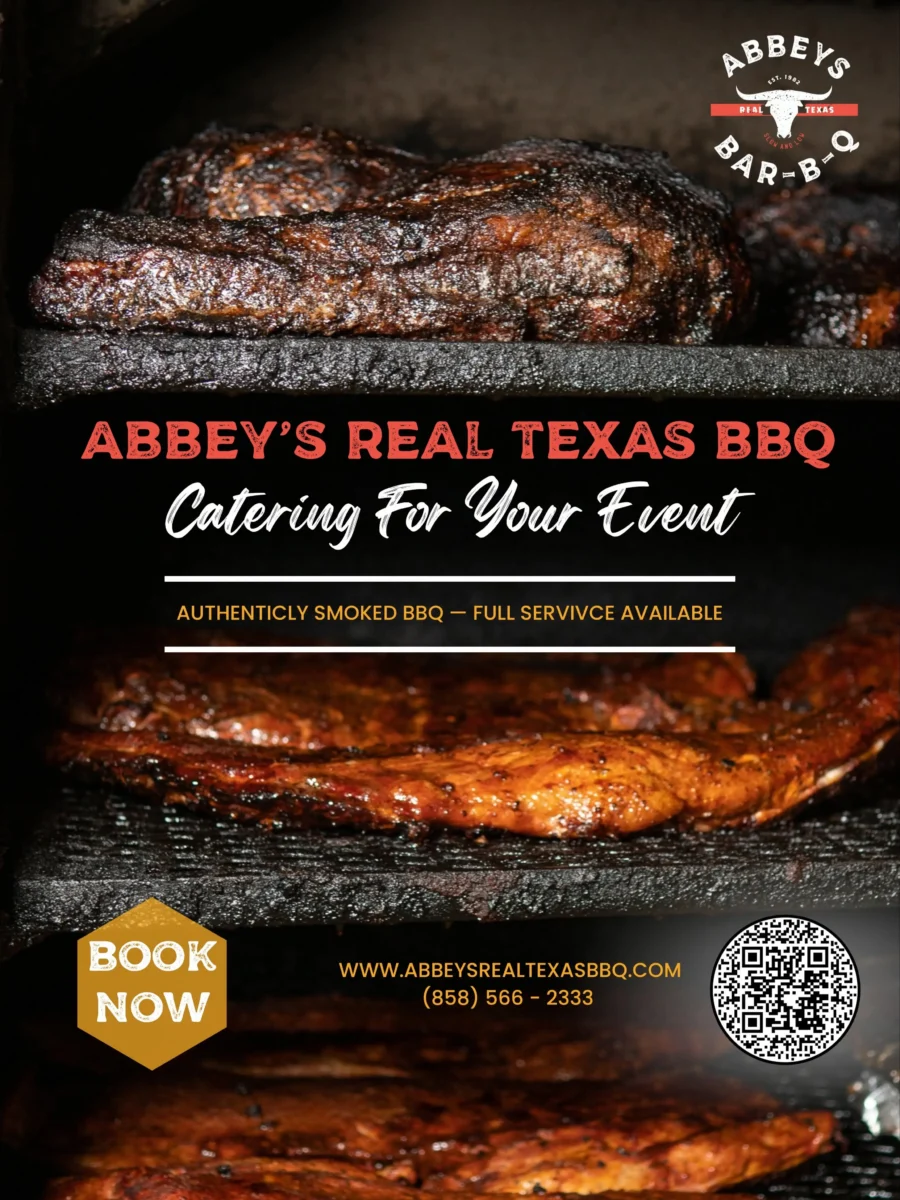
Bone-In vs Boneless Smoking

How Bone Structure Affects Texas BBQ

Bone-in cuts tend to cook more evenly and retain moisture slightly better during long smoking because the bone moderates heat and slows internal temperature rise. Boneless cuts are easier to slice and portion but may cook faster and require closer monitoring to avoid drying out. In Texas BBQ, both have a place, but bone-in cuts like beef ribs and pork shoulder often provide added structural protection during extended 18–24 hour hardwood cooks. When choosing meat for the smoker, the bone matters. Not because bones magically “add flavor” the way people often assume—they do not infuse meat like a tea bag—but because bones change how heat moves, how moisture is protected, and how the cut holds its shape during long cooking cycles. Texas barbecue is built on long cooks over hardwood. Briskets, shoulders, and ribs spend hours in steady heat while fat renders and collagen converts into gelatin. Over that kind of timeline, small structural differences begin to appear in tenderness, bark development, and how forgiving a cut feels when the pit runs slightly hot or slightly cool.

How Bones Affect Heat Flow

Bone conducts heat differently than muscle. Inside a smoker, it behaves as a dense structure that absorbs and distributes heat gradually. It can also shield nearby meat from direct airflow within the cooking chamber, creating a subtle buffer that slows temperature change in certain zones of the cut. In an offset smoker, airflow moves steadily from the firebox across the cooking chamber. Boneless cuts are exposed on all sides, meaning heat and airflow strike the meat evenly. Bone-in cuts, however, have one side anchored by bone structure, which slightly moderates heat penetration. Over long cooks, this difference creates subtle changes in how the meat warms and tenderizes.

Moisture Retention: Myth vs Reality

Many people believe bones “add flavor” to meat during cooking. In reality, bones contribute very little direct flavor transfer to the surrounding muscle during smoking. What they actually influence is how heat moves through the cut and how moisture is preserved. Because bone moderates heat penetration, the muscle fibers surrounding it warm more gradually. This slower heating reduces the chance that those fibers tighten aggressively early in the cook, which helps the meat maintain moisture while collagen converts to gelatin. This structural protection is most noticeable on large cuts commonly used in Texas barbecue.

Collagen Breakdown and Structural Support

Texas barbecue relies on collagen-rich cuts like brisket, beef ribs, and pork shoulder. These cuts require time for connective tissue to break down into gelatin, transforming tough muscle into tender barbecue. Bone-in cuts maintain structural integrity longer during this process. The bone anchors muscle groups and helps the meat remain intact while connective tissue softens. This can be beneficial when aiming for tenderness while still keeping the cut visually structured. Boneless cuts loosen faster as collagen breaks down. While this can be useful for pulled meats, it also means pitmasters must watch texture more closely to avoid over-softening.

Slicing and Service Considerations

Boneless cuts are typically easier to slice and portion for service. Restaurants and caterers often prefer boneless brisket flats or trimmed roasts because they allow consistent slices without navigating around bone structure. Bone-in cuts require slightly different handling. Beef ribs must be separated along the bone after cooking, and bone-in pork shoulder requires removing the bone before pulling or chopping the meat. Each option offers different advantages depending on the style of service.

Cooking Time Differences

Bone-in cuts generally cook slightly slower near the bone because dense structure slows heat penetration. Boneless cuts tend to cook faster and more evenly because heat can reach every side without obstruction. In long smoking sessions, the difference in cooking time is usually modest. However, even a small change can matter when coordinating several meats in a smoker or preparing trays for scheduled service. Understanding how the bone affects heat flow helps pitmasters manage timing more accurately.

Monitoring Bone-In Cuts During Long Cooks

During long smoking sessions, tenderness checks for bone-in cuts require attention to multiple zones. Meat near the outer surface may soften earlier, while areas close to the bone may still contain collagen that needs more time to break down. This is particularly true for beef plate ribs. The exterior muscle may feel tender while the inner portion near the bone still holds slight resistance. Waiting for that final bit of resistance to disappear ensures the meat reaches proper tenderness. Temperature fluctuations in the pit can also interact differently with bone-in cuts. Bones retain heat longer than muscle, which can slightly stabilize internal temperatures during brief drops in pit heat.

When Bone-In Cuts Are Preferred

Bone-in cuts are often chosen when the goal is maximum moisture protection, traditional presentation, or structural stability during very long cooks. These characteristics make them especially popular for live-fire barbecue environments where airflow and heat can vary slightly. Many iconic Texas barbecue cuts are naturally bone-in, which reinforces their connection to traditional pit cooking.

When Boneless Cuts Are Practical

Boneless cuts are often chosen when efficiency, slicing consistency, or space management inside the smoker are the priority. In smaller pits where airflow paths are tighter, boneless cuts may also be easier to position. These cuts are particularly common in catering environments where uniform presentation is important.

The Texas Barbecue Tradition

Texas barbecue grew around large structural cuts of meat. Beef ribs and pork shoulders have long been cooked bone-in because the bone provided stability during long cooks and helped pitmasters judge doneness naturally. These traditions developed in smokehouses where meat was cooked slowly over hardwood fires and served directly from butcher paper trays. At Abbey’s Real Texas BBQ, both bone-in and boneless cuts are smoked for extended hours over green oak and mesquite in traditional cast iron offset smokers.

Experience Authentic Texas BBQ in San Diego

Whether bone-in or boneless, the fundamentals of Texas barbecue remain the same. Clean combustion, steady airflow, and patient cooking allow collagen-rich cuts to transform into tender, smoky barbecue. At Abbey’s Real Texas BBQ, briskets, pork shoulders, and beef ribs are smoked 18–24 hours over green oak and mesquite in hand-built cast iron smokers brought from Texas.

📍 Location: 6904 Miramar Road, San Diego Serving guests from Mira Mesa, University City, and La Jolla

How Texas BBQ Is Smoked (Oak vs Mesquite)

How Texas BBQ Is Smoked: Oak vs Mesquite

Texas BBQ is smoked using hardwood—primarily oak and mesquite—burned in offset smokers that produce indirect heat and clean smoke over long cook times. Oak burns steady and mild, providing consistent heat for brisket and ribs. Mesquite burns hotter and stronger, adding deeper smoke intensity when managed carefully. The balance between these woods shapes flavor, bark formation, and overall texture in traditional Texas barbecue.

Texas barbecue isn’t defined by sauce. It’s defined by fire. Before seasoning, before slicing, before resting, there is wood—because wood is both the heat source and the flavor source.

In Texas, that wood conversation usually comes down to two names: oak and mesquite. Both are hardwoods. Both burn hot enough for long cooks. But they behave differently in the firebox, and those differences matter when brisket cooks for 18–24 hours and smoke must stay clean from start to finish.

The Engine of Texas BBQ

Texas BBQ is traditionally cooked in an offset smoker where the firebox sits beside the cooking chamber. Hardwood burns in the firebox, and heat and smoke travel across the meat before exiting through a chimney stack. This design allows meat to cook in steady indirect heat rather than direct flame.

Inside this system, the pitmaster manages more than temperature. The real focus is combustion—how the fire burns and how smoke moves through the pit. When airflow and fuel are balanced correctly, the fire burns clean and the smoke stays thin and blue.

Wood becomes more than fuel in this environment. It becomes part of the ingredient list because the way it burns directly affects flavor and bark formation.

Oak: The Steady Foundation

Oak is widely considered the backbone of Texas barbecue. It burns evenly, produces steady heat, and creates a smoke profile that complements beef without overwhelming it. In many parts of Texas, post oak is the traditional choice, though other oak varieties behave similarly in the firebox.

When brisket cooks overnight, stability becomes critical. Oak produces a dependable coal bed that holds temperature consistently without dramatic spikes. This steadiness allows pitmasters to maintain the ideal 225–275°F range for long smoking sessions.

Because oak smoke is balanced and moderate, it lets seasoning and rendered beef fat remain the dominant flavors while gradually building smoke depth.

How Oak Burns

Oak burns with moderate flame intensity and produces long-lasting coals. This makes it ideal for smoking large cuts like brisket or beef ribs that require consistent heat for many hours.

Its smoke flavor tends to be warm and slightly sweet rather than sharp. That restraint matters because traditional Texas barbecue relies on clean smoke that develops gradually rather than heavy smoke applied all at once.

When pitmasters want bark that feels firm but not bitter, oak provides a dependable base fuel that supports long cooking without overwhelming the meat.

Mesquite: The Intensity Builder

Mesquite burns hotter and faster than oak and produces a stronger smoke aroma. Because mesquite trees are abundant across parts of Texas, they became part of regional barbecue tradition.

However, mesquite requires careful management. Its stronger smoke can dominate meat if used aggressively, and its higher burn temperature can raise pit heat quickly if large splits are added too fast.

For experienced pitmasters, mesquite becomes a tool for adding depth rather than the primary fuel source for the entire cook.

How Mesquite Burns

Mesquite combusts faster than oak and produces stronger smoke compounds. That strength can deepen bark color and add a bold edge to the finished barbecue when used carefully.

Because mesquite burns hotter, pitmasters often introduce it in smaller quantities during certain stages of the cook. This allows them to increase smoke intensity without overwhelming the chamber.

Controlled use of mesquite can create a layered flavor profile when combined with oak as the primary fuel.

Smoke Chemistry and Bark Development

Smoke does more than add flavor. It interacts with seasoning, rendered fat, and surface moisture to form bark. As wood combusts, compounds in the smoke adhere to the meat’s exterior and contribute to color, aroma, and texture.

Oak smoke tends to build bark gradually and evenly because it burns at a steady rate. Mesquite smoke can darken bark more quickly because it burns hotter and produces stronger smoke compounds.

The key to proper bark development is maintaining clean combustion and balanced airflow. When the fire burns correctly, smoke appears thin and slightly blue rather than thick and white.

Managing Oak and Mesquite Overnight

During a full brisket cook, pitmasters typically begin with oak to establish a steady coal bed. Once the smoker stabilizes around its target temperature, briskets are placed in the chamber and the fire is fed gradually.

Small oak splits are added periodically to maintain steady heat. Depending on pit size and weather conditions, this may occur every 30–45 minutes.

Mesquite may be introduced later in the cook as a controlled boost. A small split can deepen bark color and add aromatic intensity without overwhelming the chamber.

Why Texas Chose These Woods

Texas barbecue traditions developed around the hardwoods available in the region. Oak and mesquite were abundant, durable fuels that burned hot enough for large cuts of beef.

Over time, pitmasters refined techniques that matched these woods to beef-heavy barbecue menus. Because brisket and beef ribs contain significant fat and collagen, they stand up well to the stronger smoke produced by these hardwoods.

While other regions may favor fruitwoods for lighter meats, Texas barbecue relies on the strength and stability of oak and mesquite.

The Texas Barbecue Tradition

Texas barbecue developed around wood-fired pits where beef was cooked slowly over hardwood coals. Pitmasters learned that steady fire management produced the clean smoke needed for long brisket cooks.

Oak became the dependable base fuel because it burns evenly, while mesquite added bold intensity when used carefully. Together, these woods helped shape the flavor profile associated with Texas barbecue.

At Abbey’s Real Texas BBQ, hardwood fire remains central to the cooking process, just as it has in Texas smokehouses for generations.

Experience Authentic Texas BBQ in San Diego

Traditional Texas barbecue depends on wood, patience, and disciplined fire control. Oak provides steady heat while mesquite adds bold depth when used with restraint. Together they create the layered smoke profile that defines authentic brisket and ribs.

At Abbey’s Real Texas BBQ, briskets and pork shoulders smoke for 18–24 hours over green oak and mesquite in hand-built cast iron smokers brought from Texas.

📍 Location: 6904 Miramar Road, San Diego
Serving guests from Mira Mesa, University City, and La Jolla

How Much BBQ for 50 People?

A Texas-Style Meat and Sides Planning Guide

For 50 people, plan on ½ pound of cooked meat per adult guest if BBQ is the main meal. That equals about 25 pounds of finished meat total. Because large cuts like brisket lose 30–40% of their weight during trimming and smoking, you’ll need closer to 35–40 pounds raw weight to hit that finished number. For sides, plan on 4–6 ounces per person per side, depending on how many sides you serve.

Feeding 50 people with Texas barbecue requires more than simple math. Brisket shrinks. Ribs carry bone weight. Sausage holds its size better. Pork shoulder renders down and changes texture. Understanding yield is the difference between a generous spread and a tray that looks thin halfway through service.

The biggest shift in thinking is this: you plan from finished (cooked) weight, not raw weight. Raw weight is what you buy. Finished weight is what you serve. Yield is what connects the two.

General Meat Guidelines Per Person

Start with portion size. When BBQ is the primary meal, most adults eat around ½ pound of cooked meat. Some groups eat more, some less, but this number is the safest baseline when you want to avoid running short.

If you know your crowd is lighter—more kids, smaller portions, or a lunch event—you can adjust slightly downward. If it’s a wedding reception, a big backyard party, or an event where people linger, stay close to the full estimate and assume seconds will happen.

For 50 adult guests, the safe planning number is simple: 50 × ½ lb = 25 lbs cooked meat. Everything else in your plan is built to reliably hit that finished number.

Understanding Yield Loss

This is where most BBQ planning fails. Large barbecue cuts lose weight during trimming and long smoking cycles, so what you buy is not what ends up on the tray. Brisket is the biggest example because it loses weight in multiple ways: trimming fat, moisture evaporation, and long exposure to heat.

Planning from raw weight alone almost always leads to shortages. The raw number looks big until the pit does what the pit does. Yield is the bridge between what you buy and what you serve, and you should treat it like the core equation of barbecue planning.

If you want 25 pounds cooked, you typically need about 35–40 pounds raw when brisket or pork shoulder make up the majority of the spread. That range gives you room for trim loss, moisture loss, and normal variability in long cooks.

How Brisket Yield Changes Your Numbers

Brisket is the reason Texas BBQ planning needs yield math. A whole packer brisket can lose a large percentage of its raw weight once it’s trimmed and smoked. The longer the cook, the more moisture is driven off, and the more rendered fat leaves the final product.

If you want 15 pounds of finished brisket, you usually need closer to 22–25 pounds raw depending on trimming style and cook conditions. That is why brisket-based events run short when planning is based on “how big the brisket looks” rather than finished-weight targets.

Brisket also changes as it rests. If it is sliced too early, moisture escapes and slices tighten as they cool. That can make portions feel smaller even if the cooked weight is technically correct.

A Sample Meat Breakdown for 50 Guests

A balanced Texas BBQ spread usually includes more than one meat. Variety helps portion control naturally because guests sample instead of stacking only brisket. It also protects you operationally—if brisket runs a little short, sausage and pork shoulder carry the line.

A strong target for 50 adult guests is 25 pounds cooked meat total. A practical breakdown that keeps brisket as the anchor while adding support meats looks like 15 pounds cooked brisket, 6 pounds cooked sausage, and 4 pounds cooked pork shoulder.

To hit those cooked numbers, you buy more raw weight, especially for brisket and pork shoulder. Sausage tends to hold its size better and has minimal shrink compared to large roasts.

Ribs and Bone Weight Considerations

Beef ribs are iconic in Texas BBQ, but ribs change planning because bone weight reduces edible yield. A rack may look heavy, but a meaningful portion of that weight is bone. That makes ribs more expensive per edible ounce and easier to underestimate if you plan by raw pounds alone.

If beef ribs are a centerpiece meat, many pit crews plan close to one pound of raw ribs per person, depending on how large the ribs are and whether ribs are the main focus or a supporting option.

If ribs are included as a secondary offering, you can reduce the amount per person and rely on brisket and sausage to cover the bulk of the portions. The key is not assuming ribs are “all meat” once cooked.

How Much BBQ Sides for 50 People?

Sides add volume and balance the richness of smoked meat. Most events do best with 3–4 sides, and a dependable planning range is 4–6 ounces per person per side.

If you serve three sides and plan 5 ounces per person per side, that equals 50 × 5 oz × 3 sides = 750 ounces, or about 47 pounds of sides total. That sounds heavy until you remember it is distributed across multiple items and includes heavier sides like beans and potato salad.

Beans and potato salad usually move faster than slaw. If your crowd loves hearty sides, shift weight into beans and potato salad. If the event is outdoors on a hot day, slaw often performs better because it feels lighter.

Timing and Holding Considerations

Quantity is only part of the plan. Timing changes perceived yield. Brisket should rest properly after smoking, and it should be sliced as close to service as possible. If brisket is sliced too early and held too long, moisture escapes and the meat tightens, which makes portions feel smaller and less satisfying.

For catering and gatherings, holding meats whole until service protects bark and preserves moisture. Slicing to order keeps trays visually full and avoids the dry-tray problem where pre-sliced meat sits exposed.

In Texas BBQ, service timing is part of the craft. A well-rested brisket slices clean, bends slightly, and keeps juices suspended in the slice instead of flooding the cutting board.

Adjusting for Event Type

Different events change how people eat. Use the same yield math, but adjust portion expectations based on the crowd and the setting. Corporate lunches often run lighter, while backyard parties and evening receptions tend to run heavier because people linger and return for seconds.

When in doubt, rounding up slightly is safer than rounding down. Running out of brisket leaves a stronger impression than having modest leftovers, and a few extra pounds can protect the experience.

The safest approach is to keep the finished-weight target steady, then adjust meat mix and side volume based on the vibe of the event.

Quick Planning Reference for 50 People

If you want a reliable checklist without losing accuracy, use finished weight first, then back-calculate raw weight with yield in mind. This keeps your plan grounded in what actually ends up on the serving tray.

A simple baseline for 50 guests is 25 pounds cooked meat total, about 35–40 pounds raw combined, and roughly 40–50 pounds of sides if you are serving 3–4 sides. Bread, pickles, and onions are small add-ons that still matter because they help balance richness and stretch the tray.

This approach avoids the most common problem in BBQ catering: the raw weight looks massive at purchase, then suddenly feels small once trimming and shrink happen.

The Texas Barbecue Tradition

Texas barbecue has always been built around large cuts and long cooks. That tradition forces planning discipline because brisket and pork shoulder demand time, steady heat, and patience. When the fire is managed correctly, the meat finishes tender, but it will still shrink and render the same way every time.

In classic smokehouses, pitmasters learned to plan from the pit backward: know your yield, know your timing, and slice with intention. That mindset is how you serve a crowd without running short and without compromising quality.

At Abbey’s Real Texas BBQ, the same principles apply—clean combustion, controlled airflow, and long cook cycles that make yield predictable when the fire is steady.

Experience Authentic Texas BBQ in San Diego

Planning BBQ for 50 people is easiest when you start with finished portions and let yield guide the raw purchase. Aim for 25 pounds cooked meat, build variety with sausage or pork shoulder, and protect quality by slicing close to service. Good math prevents shortages, and good timing keeps trays looking generous.

At Abbey’s Real Texas BBQ, briskets and pork shoulders are smoked 18–24 hours over green oak and mesquite in hand-built cast iron smokers brought from Texas. Whether feeding 10 or 50, the approach stays steady: clean combustion, patient cook cycles, and proper slicing at service.

📍 Location: 6904 Miramar Road, San Diego
Serving guests from Mira Mesa, University City, and La Jolla

Gas Grill vs Wood Smoker

Gas Grill vs Wood Smoker: Why Texas BBQ Needs Hardwood Fire

A gas grill uses propane or natural gas for direct heat cooking, while a wood smoker burns hardwood to produce indirect heat and live smoke over long periods. Gas grills are efficient and convenient for quick cooking, but they cannot replicate the smoke chemistry, bark formation, and collagen breakdown achieved through extended hardwood smoking. For authentic Texas barbecue—especially brisket and beef ribs—a wood smoker is the proper tool.

Barbecue equipment determines outcome. You can season meat carefully, trim it precisely, and monitor internal temperature closely, but if the heat source does not match the cooking goal, the final texture and flavor will change.

Gas grills and wood smokers are built for different purposes. One excels at speed, simplicity, and convenience. The other exists for patience, transformation, and the slow structural change that turns tough cuts into tender slices.

How a Gas Grill Works

A gas grill burns propane or natural gas beneath metal grates. Burners produce controlled flames, and temperature is adjusted with knobs that increase or reduce fuel flow. It is quick, predictable, and easy to start, which is why it is a common everyday cooking tool.

Most gas grill cooking is direct heat. Even when you create “indirect zones,” the environment still behaves like a grill: relatively dry air, minimal combustion byproducts, and a clean-burning fuel source that does not naturally create continuous smoke.

That makes gas grills excellent for foods designed to cook fast. But traditional Texas barbecue is not fast cooking. Texas barbecue is low and slow craft, where time, airflow, and combustion shape the final result.

How a Wood Smoker Works

A wood smoker—especially an offset smoker—burns hardwood in a separate firebox. Heat and smoke travel indirectly through a cooking chamber before exiting through a stack. This creates a low, steady temperature environment designed for long cooks, typically in the 225–275°F range.

A wood smoker is not only a heat source. It is a flavor and texture engine. Hardwood combustion releases smoke particulates and aromatic compounds that adhere to the meat’s surface and interact with fat, seasoning, and moisture over time.

The fire must be actively managed. Airflow controls oxygen. Oxygen controls combustion quality. Clean combustion produces thin blue smoke that smells sweet and light. Poor airflow produces thicker, harsher smoke that can turn bark bitter and dull the meat’s natural flavor.

The Core Difference Between Gas and Wood

Gas is a clean-burning fuel. It produces heat efficiently, but it contributes very little flavor on its own. Any flavor from gas-grilled food comes mostly from browning, seasoning, and rendered drippings hitting hot surfaces.

Wood produces heat and flavor simultaneously. As oak or mesquite combusts, it releases aromatic compounds that attach to the meat’s surface and build depth gradually over hours. That slow accumulation is a defining feature of true barbecue.

You can add wood chips to a gas grill to imitate smoke, and it can help, but it does not create the same environment. Chips burn quickly and do not sustain the long, clean combustion cycle produced by split hardwood over many hours.

Bark Formation

Bark—the dark crust on brisket and ribs—forms through smoke exposure, surface dehydration, rendered fat, seasoning interaction, and time. It is not simply “burnt seasoning.” It is the result of a controlled environment where the surface dries gradually while smoke compounds bond to it.

Gas grills struggle to produce true bark because they do not create continuous wood smoke or the long, low convection environment needed for slow crust development. Gas can brown a surface, but browning and bark are not the same thing.

Wood smokers create steady airflow that gently dehydrates the exterior while smoke adheres. Fat renders gradually and helps set the seasoning into a textured crust. That bark then protects the interior through the rest of the cook and delivers concentrated flavor in every bite.

Collagen Breakdown and Time

Texas barbecue is built around collagen-rich cuts like brisket and beef ribs. These cuts are tough when raw because they contain strong connective tissue. To become tender, they need extended time at low heat so collagen can convert into gelatin and muscle fibers can relax rather than tighten into chew.

Gas grills are not designed for that duration or that style of cooking. While some can hold lower temperatures, they lack the smoke saturation and airflow design that define long-form barbecue. The environment remains relatively dry, and the smoke compounds that shape bark and flavor are not present in the same way.

Wood smokers are engineered for extended indirect heat. Thick steel or cast iron construction stabilizes temperature and reduces sudden swings, allowing connective tissue to break down slowly without drying out the surface.

Managing Live Fire vs Turning a Knob

Running a wood smoker teaches lessons gas equipment does not demand. As outdoor temperature drops, draft changes. A damper adjustment changes oxygen flow. Oxygen flow changes combustion. Combustion changes both heat consistency and smoke quality.

Adding a split of mesquite too aggressively can spike chamber heat and tighten the exterior early. Waiting too long can cool the coal bed and slow collagen conversion. Fire management becomes an active rhythm: small splits, steady airflow, and constant attention to clean combustion.

Gas does not require that awareness because it is controlled combustion by design. Wood is managed combustion, and that difference shows up in bark texture, smoke aroma, and tenderness.

When a Gas Grill Makes Sense

Gas grills make sense when speed and simplicity are the priority. They are excellent for quick meals, high-heat searing, smaller gatherings, and places where live-fire smoking is not practical due to ventilation or time limitations.

There is nothing inherently wrong with gas. It is simply a different tool. The problem happens when people expect a gas grill to deliver bark, smoke depth, and collagen-driven tenderness that a wood smoker is designed to create.

If your goal is weeknight cooking, gas is efficient. If your goal is Texas barbecue, hardwood becomes essential.

Why Texas BBQ Requires Wood

Texas barbecue formed around hardwood availability—especially oak and mesquite—and the offset smoker evolved to handle large beef cuts over long cook times. The meat and method developed together.

Hardwood combustion creates the smoke compounds that build bark and the steady convection environment that supports long collagen conversion. That environment cannot be fully recreated with gas burners because the smoke is not continuous and the combustion is not the same.

At Abbey’s, briskets and pork shoulders are smoked for 18–24 hours over green oak and mesquite in hand-built cast iron smokers brought from Texas. The goal is clean fire, controlled airflow, and patience built into every cook cycle.

The Texas Barbecue Tradition

Texas barbecue is built on live fire. Long before modern convenience equipment existed, pitmasters learned that hardwood smoke and steady airflow were the foundation of real brisket and ribs.

Gas grills excel at grilling, but Texas barbecue is not grilling. It is slow transformation—fat rendering, collagen conversion, and bark development over hours of clean combustion.

At Abbey’s Real Texas BBQ, the process stays rooted in tradition: hardwood fire, disciplined airflow control, and long cook cycles that produce true Texas texture and flavor.

Experience Authentic Texas BBQ in San Diego

Gas grills are practical for everyday meals, but wood smokers are built for barbecue. If your goal is true Texas brisket—peppered bark, rendered fat, and deep oak aroma—hardwood is essential. The fire shapes the meat, and the method defines the result.

At Abbey’s Real Texas BBQ, briskets and pork shoulders are smoked 18–24 hours over green oak and mesquite in hand-built cast iron smokers brought from Texas. The process relies on steady airflow, live fire, and patient cook cycles, not gas burners.

📍 Location: 6904 Miramar Road, San Diego
Serving guests from Mira Mesa, University City, and La Jolla

Why Texas BBQ Focuses on Beef

Brisket, Ribs, and the Fire That Built the Tradition

Texas BBQ focuses on beef because of the state’s deep cattle ranching history, the availability of affordable working cuts like brisket, and the way hardwood smoking transforms tough beef muscles into tender slices. While pork and sausage are present, beef—especially brisket and beef ribs—became the foundation of Texas barbecue due to regional agriculture, butcher traditions, and pit designs built to handle large, collagen-rich cuts over long cook times.

Barbecue traditions develop around geography. In Texas, that geography favored cattle. Long before offset smokers became iconic, ranching shaped what was available, what was affordable, and what local meat markets needed to turn into food people would actually line up for.

Over time, pit design, seasoning habits, service style, and cook timelines evolved around that simple reality. Texas barbecue didn’t reject pork. It just grew up around cattle, and beef became the cut that the entire system was designed to cook well.

The Cattle Industry’s Influence

Texas has one of the longest-running cattle ranching histories in the United States. Large herds required processing, and butchers needed practical ways to use every part of the animal. Premium cuts sold quickly. Tougher muscles did not, especially before modern refrigeration and supply chains made distribution easier.

That is where barbecue enters the story. Slow cooking over hardwood was not only about flavor. It was a method of turning working cuts into something tender, valuable, and worth serving. Smoke and time became tools of transformation, making overlooked beef cuts the most desired items on the menu.

In regions where hog farming dominated, pork naturally became the focus. In Texas, beef was more plentiful, and barbecue reflects that origin in every slice served.

Brisket: The Defining Cut

If one cut explains why Texas barbecue centers on beef, it is brisket. Brisket comes from the lower chest of the steer, a muscle group built to support weight. Because it works hard, it is dense with collagen and connective tissue. Raw brisket is tough for the same reason a working muscle is strong: it was built to do a job.

A whole packer brisket includes the flat and the point, and both sections respond to long, steady heat in a way few other cuts do. Over an 18–24 hour cook, collagen converts into gelatin and fat slowly renders, turning structure into tenderness. The result is not shredded meat. It is sliceable, supple beef that still holds together cleanly.

This is where Texas stands apart. Instead of relying on sauce to carry the experience, Texas brisket is sliced against the grain with bark intact. The outside builds a peppery crust from smoke, seasoning, and rendered fat. The interior stays moist and elastic when the fire is managed correctly.

Beef Ribs and Structural Cooking

Beef plate ribs reinforce the beef-forward approach even further. These ribs are thick, heavily marbled, and built for long cooks. Like brisket, they contain significant connective tissue that benefits from extended smoke exposure. When cooked properly, they develop deep bark and a gelatin-rich interior that feels rich without becoming greasy.

The size of beef ribs also shaped Texas pit design. Offset smokers needed enough space to handle large briskets and full rib plates. Once pits scaled to support big beef cuts, the tradition became self-reinforcing. The equipment was built around beef, and the menu followed the equipment.

In that sense, pit culture and cattle culture moved together. Beef did not just become popular in Texas barbecue. It became the cut the entire system was designed to cook consistently.

Simplicity in Seasoning

Texas barbecue leans toward beef because beef carries bold natural flavor and holds up under smoke without needing heavy sauce. That is why the classic seasoning approach stays minimal: salt and coarse black pepper, sometimes with a light supporting role from garlic or other spices.

In many pork-centered traditions, sauce plays a central role. In Texas barbecue, sauce is usually served on the side. The focus stays on the meat, the smoke, and the bark, not on covering the cut with a dominant flavor.

Beef responds well to that restraint. Pepper bark complements rendered fat. Oak smoke deepens beef flavor rather than competing with it. The simplicity became part of the identity: let the meat speak, let the wood support, and let the knife reveal the finished texture.

The Role of Hardwood

Texas barbecue relies heavily on hardwoods such as oak and mesquite. These woods burn hot and steady when managed correctly, producing the clean combustion needed for long cooks. Beef’s density pairs naturally with these fuels because it can absorb smoke gradually without becoming overwhelmed.

Mesquite is especially influential. It produces a strong smoke profile that can overpower lighter meats if used carelessly, but beef can carry it more gracefully—especially when balanced with oak and kept clean through proper airflow.

Offset smokers move heat and smoke indirectly across the meat. When pits are built from thick steel or cast iron, temperature swings are softened, supporting overnight cooks where collagen needs time to convert and fat needs time to render without scorching the surface.

Why Beef Tests Fire Control

Cooking beef well requires stable combustion. During an overnight brisket cook, airflow adjustments must be small and deliberate. Too much oxygen raises chamber temperature quickly and can tighten the flat. Too little oxygen produces dirty smoke that clings bitterly to rendered fat.

Beef shows mistakes quickly. The flat can dry if the pit runs hot. Bark can turn harsh if smoke becomes heavy. If the fire runs too cool for too long, collagen conversion slows, leaving meat technically “done” by temperature but still tight by texture.

This is why beef became a badge of pit skill in Texas barbecue culture. Mastering brisket and beef ribs requires clean combustion, steady heat, and disciplined patience over long hours.

Meat Market Service Style

Texas meat markets historically served sliced beef on butcher paper. Customers ordered by weight, and sauce was optional. This format reinforced beef dominance because brisket slices cleanly, beef ribs hold structure, and sausage fits neatly into a by-the-pound service style.

Pork shoulder, which naturally shreds, did not align as neatly with a sliced-by-the-pound identity. Pork remains present across Texas, but brisket stayed the centerpiece. The market format shaped the tradition, and the tradition reinforced the market format.

Beef became the meat that matched both the pit and the counter: large cuts, long cooks, and slicing to order.

Pork and Sausage Still Matter

Texas barbecue is not exclusively beef. Sausage remains essential, shaped by Central European influence across the state. Pork ribs and pork shoulder appear on many menus and can be excellent when cooked with clean smoke and proper timing.

The difference is emphasis. In Texas, beef defines the identity and pork complements it. Even many sausage programs lean beef-forward or use beef-pork blends, keeping the smokehouse core anchored in cattle tradition.

Texas barbecue trays often include pork and sausage, but brisket and beef ribs remain the anchor cuts that define the style.

The Texas Barbecue Tradition

Texas barbecue rests on cattle ranching, butcher practicality, and pit craftsmanship. Tough working cuts like brisket became valuable once hardwood smoking proved capable of transforming collagen into tenderness. Over time, pits were built to handle large beef cuts, seasoning stayed simple to highlight meat flavor, and service evolved around slicing to order.

Beef remains central not because of trend, but because the method was built around it. The cattle came first. The pits followed. The tradition holds because it works.

At Abbey’s Real Texas BBQ, that lineage continues through steady long cooks fueled by green oak and mesquite and the discipline required to keep smoke clean from start to finish.

Experience Authentic Texas BBQ in San Diego

If you want to understand Texas barbecue, start with brisket. Its transformation from tough working muscle to tender, sliceable meat captures the entire philosophy of the tradition. Add beef ribs for depth and richness, and let pork and sausage round out the tray while beef remains the anchor.

At Abbey’s Real Texas BBQ, brisket and beef ribs are smoked 18–24 hours over green oak and mesquite in hand-built cast iron smokers brought from Texas. The method stays steady and traditional—clean combustion, disciplined airflow, and the patience required for beef to fully transform.

📍 Location: 6904 Miramar Road, San Diego
Serving guests from Mira Mesa, University City, and La Jolla

On-Site Smoker Catering Explained

Live Hardwood BBQ at Your Event

On-site smoker catering is a service where barbecue is cooked at your event location using a live hardwood smoker rather than being fully prepared off-site and reheated. Meats are slow-smoked over wood—often for 18–24 hours—then finished, rested, and sliced fresh on location. This approach preserves bark texture, smoke quality, and moisture while allowing guests to experience real pit cooking in real time.

Barbecue is built on fire management. When that fire is removed from the service environment, something changes. The meat may still taste good, but it no longer carries the immediacy of live smoke, freshly sliced brisket, or sausage pulled from the pit at the right moment.

On-site smoker catering keeps the process intact. The pit travels, the wood burns, airflow is managed on location, and the final stages happen within sight—and often within smell—of the guests.

What On-Site Smoker Catering Actually Means

There are two primary styles of barbecue catering. One is fully off-site cooking, where meats are smoked ahead of time, transported in hot boxes, then served from pans or reheated as needed. The other is on-site smoker catering, where the pit is part of the event and the fire stays active at the venue.

In true on-site service, the smoker is set up at the event location—whether that’s a private home, corporate property, wedding venue, or outdoor gathering space. Hardwood burns in the firebox, smoke flows through the chamber, and the pit team manages airflow and heat as if they were running service at the restaurant.

Large cuts like brisket and pork shoulder may begin their cook overnight when total smoke time reaches 18–24 hours. What makes it on-site is the critical finishing window at the venue: resting, timing checks, bark setting, sausage warming, and slicing right before plates are built.

Why Live Fire Makes a Difference

Barbecue changes after it leaves the pit. Resting is necessary, but once meat is sliced, the clock starts. Juices that were suspended inside the meat begin to escape, bark softens in warm holding environments, and aroma dulls as smoke character fades.

On-site smoker catering protects the most important moment: the moment brisket is sliced and served. When slicing happens just before service, the meat stays supple, bark holds texture, and the plate tastes like it came off the smoker rather than out of a warmer.

Live fire also changes the atmosphere. Oak and mesquite drifting through the air becomes part of the event in a way buffet trays cannot replicate. Guests smell barbecue before they see it, and they gather near the pit because the process feels real.

The Role of Offset Smokers

Traditional Texas on-site catering relies on offset smokers. These pits separate the firebox from the cooking chamber, creating indirect heat and flowing smoke that moves steadily across the meat. This matters because barbecue is not just heat—it is controlled airflow, clean combustion, and gradual rendering.

Heavy construction changes how stable the cook feels at an event. Thick steel or cast iron smokers hold temperature more evenly and resist sharp swings caused by wind, humidity, direct sun exposure, or temperature drops after sunset.

The fire still demands discipline. Green oak burns steady and moderate. Mesquite burns hotter and more intense, which can be useful when balanced correctly. Managing split size, coal beds, and airflow while guests arrive is part of what makes on-site service real pit craft.

The Cooking Timeline

True on-site smoker catering respects the time required for Texas barbecue cuts. Brisket and pork shoulder often need 18–24 hours to fully break down collagen and render fat, so the cook commonly starts overnight in a controlled environment where the fire can be managed consistently from hour one.

For event service, meats are transported whole and uncut. They remain insulated and continue resting, which is part of finishing rather than a pause. Resting allows juices to redistribute and texture to stabilize, which is why properly rested brisket slices cleaner and stays moister on the plate.

Once on-site, the pit team checks the meat again. If bark softened during transport, brisket may return briefly to steady heat to firm the exterior without drying the interior. Sausage and ribs are often finished entirely on-site because they respond quickly to chamber conditions and benefit from live timing.

Sensory Impact at Events

On-site smoker catering changes an event because the pit becomes part of what guests experience. As hardwood burns, smoke aroma develops in stages. Early smoke can carry sharper notes, and as combustion cleans up, the smell softens into something warm and slightly sweet.

Guests notice the difference even if they do not know the technical reasons. They drift toward the smoker, ask what is cooking, and watch the stack. Seeing thin blue smoke signals something real: the fire is being managed correctly and the barbecue is being built, not reheated.

Fresh slicing is the visual moment that seals authenticity. Guests see bark hold, notice juices stay in the slice, and understand immediately that the meat is being served at its peak.

Operational Pit Discipline on Location

Running a smoker at a catering event requires discipline because the environment is unpredictable. Wind direction, humidity shifts, and temperature changes affect combustion and draw, so setup and positioning matter. A pit team must ensure the firebox has room to breathe and smoke moves safely away from guests.

Fire management often becomes more deliberate on-site than at a fixed location. Smaller splits are fed consistently to prevent spikes. Dampers are adjusted when wind changes. Bark is watched closely because high humidity can soften the exterior faster than expected.

Just before service, the meat is checked for tenderness again. If brisket rested through transport, the goal is for the knife to glide with minimal resistance and for slices to bend without breaking. That outcome comes from continued fire control through the final moment.

When On-Site Smoker Catering Is the Right Choice

On-site smoker catering works best when the experience matters as much as the food volume. Outdoor weddings, corporate gatherings, private celebrations, community events, and large backyard receptions benefit from live smoke and fresh slicing at service.

Some venues require off-site service because of ventilation limitations or fire codes. In those cases, timing and holding methods become critical to protect bark texture and moisture. But when space and safety allow, live fire adds authenticity that buffet pans cannot match.

If the event goal is real Texas barbecue—not simply smoked meat—on-site service is the format that preserves the hardwood process through the moment guests eat.

Experience Authentic Texas BBQ in San Diego

On-site smoker catering preserves what makes Texas barbecue real: hardwood combustion, controlled airflow, and fresh slicing at the moment guests eat. It protects bark integrity, keeps meat moist, and turns service into an experience instead of a reheated buffet line.

At Abbey’s Real Texas BBQ, briskets and pork shoulders are smoked for 18–24 hours over green oak and mesquite in hand-built cast iron smokers brought from Texas. The approach stays steady and traditional—clean smoke, disciplined fire management, and slicing done just before serving.

📍 Location: 6904 Miramar Road, San Diego
Serving guests from Mira Mesa, University City, and La Jolla

Smoked Sausage & Hot Links Explained

Smoked sausage and hot links are both hardwood-smoked meats, but they differ in seasoning, heat level, and sometimes grind texture. Traditional smoked sausage focuses on balanced salt, black pepper, and garlic with a firm snap and juicy interior. Hot links include a heavier dose of chili pepper and spice, delivering noticeable heat while maintaining proper smoke integration. In Texas-style barbecue, both are cooked low and steady over hardwood so the fat renders gradually and the casing tightens without bursting.

Sausage often sits beside brisket and ribs without drawing attention, but in a serious Texas barbecue program, it reveals almost everything about the pit and the butcher. Sausage tests meat selection, grind consistency, fat ratio, seasoning restraint, casing quality, and fire control in a way few other items do.

You can hide a brisket mistake with slicing technique. You cannot hide a bad sausage. When you cut into a link, the structure is exposed immediately—either it holds together with moisture and snap, or it crumbles, leaks, or tastes muddy from heavy smoke.

What Is Smoked Sausage?

Smoked sausage in the Texas tradition is usually a coarse-ground blend of beef, or beef and pork, seasoned simply and stuffed into natural casings. The classic flavor leans on salt, cracked black pepper, and garlic. The goal is balance, not heat, and the sausage should taste like meat first, then smoke, then seasoning.

Fat percentage matters more than most people realize. Many well-made Texas links land around 25–30% fat. Too lean and the sausage dries out quickly if the pit runs hot. Too fatty and the link turns greasy, with rendered fat leaking out rather than staying suspended inside the filling.

The casing is not just packaging. It is structure. Natural casings shrink as they cook, tightening around the filling. When the cook is controlled correctly, you get a clean snap, followed by a juicy interior that stays cohesive instead of falling apart.

What Are Hot Links?

Hot links share the same foundation as smoked sausage—ground meat, deliberate fat ratio, and natural casings—but they shift the seasoning profile toward noticeable heat. The spice blend commonly includes crushed red pepper, cayenne, paprika, and sometimes chili powder, depending on the shop’s style.

The heat should be present without erasing the meat. Good hot links deliver warmth that builds rather than spikes. You taste beef, smoke, and rendered fat first, then the pepper bloom arrives on the finish. If the first impression is pure burn, it often signals weak meat, imbalance, or sloppy smoke.

Hot links are less forgiving with smoke because spice amplifies perception. Heavy smoke can clash with chili heat quickly, and dirty combustion stacks bitterness on top of the spice. That is why clean fire management matters even more with hot links than with mild sausage.

Structural Differences at a Glance

Feature Smoked Sausage Hot Links
Heat Level Mild to moderate Noticeably spicy
Seasoning Focus Salt, pepper, garlic Chili pepper, paprika, cayenne
Grind Texture Coarse traditional grind Coarse or slightly finer
Smoke Integration Balanced, clean oak profile Clean smoke is essential to avoid bitterness
Bite Firm snap, juicy interior Firm snap, juicy with warming finish

The Role of Fat in Both

Sausage texture is built on fat behavior. During low-and-slow smoking, fat begins to soften and render in the 130–150°F range. The goal is controlled rendering where fat softens and stays integrated with the meat rather than draining out through the casing.

If the pit runs too hot, fat liquefies too quickly and escapes, leaving the interior dry and crumbly even if the outside looks finished. If the pit runs too cool, fat stays solid and the sausage eats dense and pasty, like the filling never relaxed.

In an offset smoker burning hardwood, steady airflow keeps the chamber in a stable window so fat can soften gradually and redistribute. When you slice a properly smoked link, you should not see pools of grease. You should see moisture suspended in the meat matrix: juicy, cohesive, and clean.

Managing Sausage in an Offset Smoker

Sausage demands attention in a live-fire pit. Unlike brisket, which benefits from long stretches of stable heat, sausage reacts quickly to temperature swings. A link can go from perfect to split casing in a short window if the fire spikes or airflow changes suddenly.

On a brisket cook, sausage typically goes on later when the coal bed is predictable and airflow is smooth. Pit thickness matters here. Smokers with heavy construction—especially cast iron—hold heat more evenly and reduce sudden spikes that can burst casings before the interior is ready.

You learn to watch the surface. Early on, the casing looks pale and soft. As smoke adheres and heat rises gradually, color deepens into a reddish brown. If blistering or wrinkling appears too early, it often means the chamber is running hot or the link is sitting in a harsh zone.

How Smoke Changes Flavor

Smoke does more than add aroma. It lightly dries the surface, firms the casing, and interacts with fat. Oak tends to produce steady, moderate smoke that lays down even color over time. Mesquite burns hotter and can intensify quickly, which means it must be managed carefully—especially with hot links where spice can magnify harshness.

Clean smoke should be thin and blue, not heavy and white. Heavy smoke clings bitterly to casings and dulls the nuance of pepper, garlic, and chili. Proper smoke enhances pepper sharpness, garlic warmth, chili depth, and beef richness. Improper smoke flattens everything into one harsh note.

When to Choose Each

Smoked sausage is the balanced choice. It pairs naturally with brisket, ribs, and sides without competing for attention. It is meat-forward, steady, and dependable, which is why it belongs on nearly every Texas tray.

Hot links are the contrast move. They cut through fatty brisket and bring warmth to the plate. The heat resets the palate and keeps bites dynamic, especially when the tray is rich and smoke-forward.

Many traditional Texas trays include both. Mild sausage anchors the meal. Hot links add lift.

The Texas Barbecue Tradition

Texas barbecue sausage carries strong Central European influence, especially from German and Czech meat markets that helped shape early smokehouse culture. Over time, seasoning stayed meat-forward, and offset pits made smoke integration a defining feature.

Even hot links are expected to maintain structure and balance rather than chase extreme heat. The goal is depth: beef, fat, spice, and hardwood smoke working together in one bite.

At Abbey’s Real Texas BBQ, sausage reflects that lineage. Green oak provides steady burn and clean smoke, mesquite adds intensity in balance, and hand-built cast iron smokers help keep heat stable so casings tighten slowly without bursting.

Experience Authentic Texas BBQ in San Diego

Smoked sausage and hot links may look similar on the tray, but they serve different roles. Smoked sausage delivers balance and classic pepper-garlic depth. Hot links bring spice that cuts through rich brisket and ribs. Both depend on the same fundamentals: proper fat ratio, casing integrity, and clean hardwood combustion.

At Abbey’s Real Texas BBQ, sausage and hot links are smoked low and steady over green oak and mesquite in hand-built cast iron smokers brought from Texas. The approach is patient and traditional—clean fire, controlled airflow, and careful timing so the casing snaps and the interior stays juicy without excess grease.

📍 Location: 6904 Miramar Road, San Diego
Serving guests from Mira Mesa, University City, and La Jolla

Best Cuts for Texas BBQ

Brisket, Beef Ribs, Pork Shoulder, and Sausage

The best cuts for Texas BBQ are whole packer brisket, beef plate ribs, pork shoulder, and properly made sausage. These cuts carry enough fat and connective tissue to handle long hardwood smoking, where collagen converts to gelatin and fat slowly renders into the meat. Leaner cuts can be smoked, but they require tighter temperature control and usually don’t deliver the same deep, forgiving tenderness that defines traditional Texas barbecue.

Texas barbecue is not built around quick-cooking cuts. It is built around the parts of the animal that demand time—muscles that worked, carried weight, and developed connective tissue. That connective tissue is why brisket is tough raw and why it becomes something else entirely after a long day in a clean-burning offset pit.

When people talk about “Texas BBQ cuts,” they are usually pointing to the classic smokehouse lineup. The real common thread is simpler: the best cuts for Texas BBQ have enough structure, fat, and collagen to improve under extended low heat and hardwood smoke.

What Makes a Cut “Texas BBQ Worthy”

The best Texas BBQ cuts tend to share three traits. First, they carry significant connective tissue. That is collagen—tendons, seams, and webbing that holds muscle together. Collagen does not “dry out.” It needs time to convert into gelatin, and that conversion is what creates tenderness that feels moist even before sauce touches the plate.

Second, they carry fat in the right places. Marbling keeps muscle fibers lubricated during long cooks, and seam fat melts gradually, helping the meat baste itself from within instead of relying on external moisture.

Third, they can handle smoke for hours without collapsing. Texas barbecue often aims for distinct slices, clean pulls, and bark that holds. A cut that turns mushy too early cannot deliver that signature texture.

Whole Packer Brisket

If Texas barbecue has a backbone, it is the whole packer brisket—flat and point together. Brisket comes from the breast area, a heavily used muscle group loaded with connective tissue. That connective tissue is why brisket can be unforgiving if rushed and why it becomes silky when cooked correctly.

A packer gives two different eating experiences. The flat slices cleaner and leaner, while the point runs richer with more fat and softer structure. Great brisket is not just tender. It is tender while still holding a clean slice, with rendered fat that feels integrated instead of greasy.

Brisket is also the clearest demonstration of pit control. A clean fire and steady chamber temperature allow fat to render without boiling the surface and give collagen time to convert without tightening muscle fibers into chew.

Beef Plate Ribs

Beef plate ribs—often called “dino ribs”—are a classic Texas cut because they bring size, marbling, and collagen in one package. They are thick, smoke-friendly, and tolerate long cooks without drying out when the fire is managed cleanly.

Plate ribs develop a rugged bark and a gelatin-rich interior. They are often more forgiving than brisket on tenderness, but they still demand time. Rushing ribs leaves connective tissue tight and the bite stiff.

If brisket is the craft test, plate ribs are the payoff cut: deep beef flavor, heavy smoke integration, and fat that renders into a buttery mouthfeel when done right.

Pork Shoulder

Texas is beef-forward, but pork shoulder earns its place because it is built for the smoker. Pork shoulder carries plenty of collagen and intermuscular fat, which makes it forgiving during long cooks. When it reaches full tenderness, it pulls into strands that stay moist without turning watery.

The best pork shoulder has clean smoke and bark that holds up when mixed back into the meat. It is one of the few cuts where bark can be folded into the final texture without losing structure, which is why pulled or chopped pork can still taste like smokehouse meat instead of pot roast.

Pork shoulder is also a strong training cut for fire management. Because it tolerates minor drift, you can focus on maintaining stable heat and clean smoke—skills that transfer directly to brisket.

Sausage

Sausage is often underestimated until you have it done properly. In Texas, sausage matters because it tests the butcher as much as the pit. Good BBQ sausage has a firm snap and a juicy interior that stays cohesive instead of leaking.

In an offset pit, sausage lives in a narrower window than most people realize. Too hot and casings split while fat drains out. Too cool and the fat does not render correctly, leaving the interior dense. A strong sausage program signals attention to grind, fat ratio, seasoning restraint, and smoke integration.

Sausage is also a pacing tool on a tray. It brings contrast beside brisket and ribs, and when cooked correctly, it carries smoke cleanly without tasting harsh.

Secondary Cuts That Still Fit Texas BBQ

Not every Texas BBQ tray is limited to the core four. Some cuts are secondary but still “Texas worthy” because they carry enough collagen or take smoke cleanly when handled correctly.

Chuck roast can smoke well because it has marbling and connective tissue, but it tends to finish softer and more shreddable than brisket. Beef cheeks are collagen-heavy and can become dense and silky when properly trimmed and smoked. Turkey breast is a lean option that can be excellent, but it requires strict temperature control to avoid dryness. Pork ribs are common and reward simple seasoning and clean smoke, with tenderness managed for bite rather than collapse.

Best Cuts for Texas BBQ at a Glance

Cut Why It Works Main Challenge Best Finished Texture
Whole Packer Brisket High collagen + fat seams; classic Texas profile Timing tenderness without drying the flat Sliceable, supple, rendered fat
Beef Plate Ribs Thick, marbled, smoke-friendly Avoiding a tough bite from under-rendered collagen Gelatin-rich, deep beef bite
Pork Shoulder Forgiving; mixes bark and pulled meat well Avoiding muddy smoke flavor Moist pull, balanced bark
Sausage Fat + smoke + snap when done right Managing casing, fat render, narrow heat window Snappy casing, juicy interior
Turkey Breast Lean option; takes smoke cleanly Dryness risk Moist slices, light smoke
Chuck Roast Marbled, collagen-rich; great chopped beef Doesn’t slice like brisket Rich shred, hearty bark

Choosing Cuts Based on Fire Behavior

In an offset smoker, the fire does not just cook meat—it sets the pace of the entire day. Collagen-heavy cuts like brisket and plate ribs reward the most stable stretch of clean heat because connective tissue breakdown does not like big temperature spikes. When airflow is restricted, smoke turns heavy, and heavy smoke clings hardest to fatty surfaces, which is how bitter bark happens.

Over longer cooks, you learn to match cuts to the rhythm of the pit. Brisket needs the most stable window through the stall and into rendering. Plate ribs are slightly more forgiving but still reward a steady coal bed. Pork shoulder can tolerate minor drift, which is why it teaches fire management without punishing every small mistake.

The sensory tell is consistent. When the fire is clean, smoke smells warm and slightly sweet. When the fire is choked, sharp bitterness shows up before you see it, and the meat absorbs it quickly.

The Texas Barbecue Tradition

Texas barbecue formed around what was available and what the pit could handle. Working cuts—brisket, ribs, shoulder—were affordable and tough, but they became valuable once pit builders learned to control airflow and build stable heat with hardwood.

The equipment and the cuts evolved together. Offset pits were built to handle large beef cuts. Oak and mesquite became the fuel language. Seasoning stayed simple to highlight meat and smoke. The tradition is not arbitrary—it is the result of meat, fire, and practicality lining up over time.

At Abbey’s Real Texas BBQ, that philosophy continues through slow, steady cook cycles fueled by green oak and mesquite in hand-built cast iron smokers brought from Texas.

Experience Authentic Texas BBQ in San Diego

If you are building a true Texas BBQ spread, start with a whole packer brisket or beef plate ribs as the centerpiece, then add pork shoulder and sausage for depth and variety. Those cuts share the same advantage: they improve under long hardwood cooking, where collagen converts to gelatin and fat renders slowly into the meat.

At Abbey’s Real Texas BBQ, brisket and pork shoulder are smoked for 18–24 hours over green oak and mesquite in hand-built cast iron smokers brought from Texas. The method stays steady and traditional—clean combustion, controlled airflow, and the time required for connective tissue to fully break down into tenderness.

📍 Location: 6904 Miramar Road, San Diego
Serving guests from Mira Mesa, University City, and La Jolla

What Is Collagen Breakdown in BBQ ?

Why Collagen Matters in Barbecue

Collagen breakdown in barbecue refers to the gradual transformation of tough connective tissue into soft gelatin during long periods of low-temperature cooking. When cuts such as beef brisket or pork shoulder are smoked slowly—typically between 225°F and 275°F for many hours—the collagen inside the meat begins to unwind and dissolve. Over time, this connective protein converts into gelatin, a silky substance capable of holding moisture inside the meat fibers.

The result is the tenderness, juiciness, and supple texture that define properly cooked Texas barbecue.

Without this transformation, smoked meat remains tight, chewy, and dry—even if the internal temperature reaches a safe level for consumption. Many beginners assume that temperature alone determines doneness, but barbecue tells a different story.

Experienced pitmasters describe barbecue as a process governed by time, heat, and structural change, not simply by numbers on a thermometer.

Inside every brisket, an invisible chemical and structural change is unfolding. That change is collagen breakdown.

Why Brisket and Pork Shoulder Are Naturally Tough

To understand collagen breakdown, it helps to begin with the physical structure of the meat itself. Raw beef brisket feels dense, firm, and almost rigid compared to a steak. That toughness comes from connective tissue, specifically collagen, one of the most abundant proteins in the animal body.

Collagen functions as structural support, reinforcing tendons, ligaments, and the connective webbing that binds muscle fibers together. Muscles that perform heavy work naturally develop stronger collagen networks.

Historically, these cuts were less desirable before controlled smoking and slow cooking. Pitmasters discovered that time and heat could transform these stubborn cuts into something extraordinary.

BBQ Cuts That Depend on Collagen Conversion

Not every cut of meat requires collagen breakdown. Premium cuts like ribeye, filet mignon, or strip steak contain relatively little connective tissue and benefit from high-heat cooking.

Barbecue cuts are different. Cuts traditionally used in smoking contain significant connective tissue that must be broken down through extended cooking:

Low and slow cooking allows collagen to slowly unwind while muscle fibers relax and moisture redistributes. This is why these cuts transform from rigid and stubborn to tender and juicy.

The Science Behind Collagen Breakdown

Collagen behaves differently from muscle proteins during cooking:

A brisket cooked rapidly to 180°F may still contain intact collagen if it hasn’t spent enough time in the breakdown zone. Tenderness cannot be rushed.

Why Time Matters More Than Temperature

Many barbecue guides focus on temperature targets—190°F, 200°F, 203°F for brisket. While helpful, time in the collagen conversion range is more important.

Experienced pitmasters rely on physical cues:

Why Low and Slow Heat Is Essential

Traditional Texas barbecue cooks between 225°F and 275°F in offset smokers:

The Barbecue Stall Explained

During long cooks, meat may hit a stall (150°F–170°F) where temperature stops rising:

Collagen Breakdown vs Fat Rendering

Though occurring in the same window:

Both processes must succeed for authentic Texas barbecue.

Fire Management and Collagen Conversion

Maintaining consistent temperature in an offset smoker is critical:

Pitmasters monitor smoke color:

Adjusting wood gradually preserves steady heat for overnight cooks.

Why Brisket Often Takes 18–24 Hours

Large packer briskets contain two muscles—flat and point—cooking at different rates. Extended time allows:

Shortening the cook risks partially under-rendered meat.

Recognizing When Collagen Has Fully Broken Down

Signs of perfect collagen breakdown:

Overcooked meat becomes mushy; undercooked meat remains tough. Collagen breakdown creates elasticity and moisture retention.

The Texas Barbecue Tradition

Long before food science, Central Texas pitmasters understood that tenderness required:

At Abbey’s Real Texas BBQ, briskets and pork shoulders are smoked 18–24 hours over green oak and mesquite in traditional cast-iron offset smokers.

Experience Authentic Texas BBQ in San Diego

Collagen breakdown may sound technical, but it’s the foundation of traditional barbecue.

At Abbey’s Real Texas BBQ:

📍 Location: 6904 Miramar Road, San Diego
Serving guests from Mira Mesa, University City, and La Jolla

Order Now