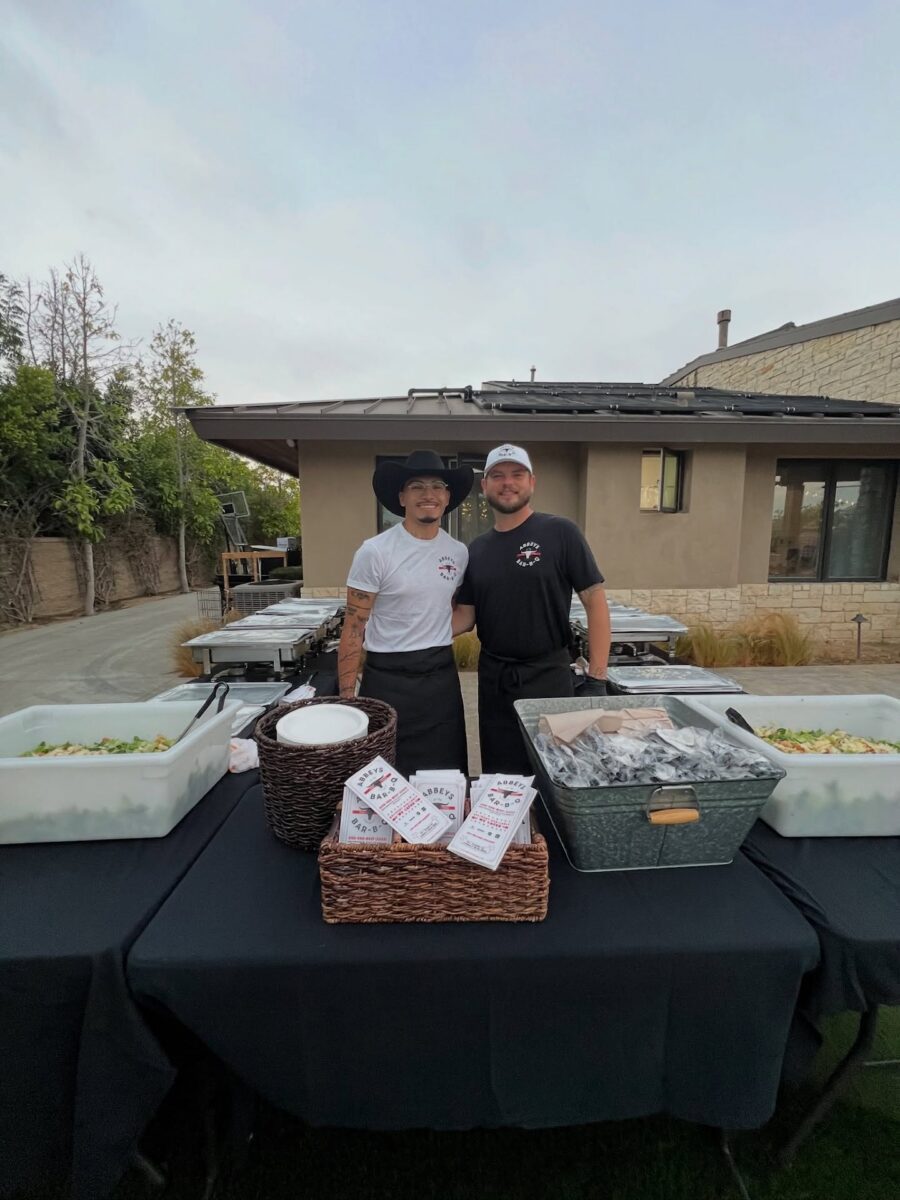
For 50 people, plan on ½ pound of cooked meat per adult guest if BBQ is the main meal. That equals about 25 pounds of finished meat total. Because large cuts like brisket lose 30–40% of their weight during trimming and smoking, you’ll need closer to 35–40 pounds raw weight to hit that finished number. For sides, plan on 4–6 ounces per person per side, depending on how many sides you serve.
Feeding 50 people with Texas barbecue requires more than simple math. Brisket shrinks. Ribs carry bone weight. Sausage holds its size better. Pork shoulder renders down and changes texture. Understanding yield is the difference between a generous spread and a tray that looks thin halfway through service.
The biggest shift in thinking is this: you plan from finished (cooked) weight, not raw weight. Raw weight is what you buy. Finished weight is what you serve. Yield is what connects the two.
Start with portion size. When BBQ is the primary meal, most adults eat around ½ pound of cooked meat. Some groups eat more, some less, but this number is the safest baseline when you want to avoid running short.
If you know your crowd is lighter—more kids, smaller portions, or a lunch event—you can adjust slightly downward. If it’s a wedding reception, a big backyard party, or an event where people linger, stay close to the full estimate and assume seconds will happen.
For 50 adult guests, the safe planning number is simple: 50 × ½ lb = 25 lbs cooked meat. Everything else in your plan is built to reliably hit that finished number.
This is where most BBQ planning fails. Large barbecue cuts lose weight during trimming and long smoking cycles, so what you buy is not what ends up on the tray. Brisket is the biggest example because it loses weight in multiple ways: trimming fat, moisture evaporation, and long exposure to heat.
Planning from raw weight alone almost always leads to shortages. The raw number looks big until the pit does what the pit does. Yield is the bridge between what you buy and what you serve, and you should treat it like the core equation of barbecue planning.
If you want 25 pounds cooked, you typically need about 35–40 pounds raw when brisket or pork shoulder make up the majority of the spread. That range gives you room for trim loss, moisture loss, and normal variability in long cooks.
Brisket is the reason Texas BBQ planning needs yield math. A whole packer brisket can lose a large percentage of its raw weight once it’s trimmed and smoked. The longer the cook, the more moisture is driven off, and the more rendered fat leaves the final product.
If you want 15 pounds of finished brisket, you usually need closer to 22–25 pounds raw depending on trimming style and cook conditions. That is why brisket-based events run short when planning is based on “how big the brisket looks” rather than finished-weight targets.
Brisket also changes as it rests. If it is sliced too early, moisture escapes and slices tighten as they cool. That can make portions feel smaller even if the cooked weight is technically correct.
A balanced Texas BBQ spread usually includes more than one meat. Variety helps portion control naturally because guests sample instead of stacking only brisket. It also protects you operationally—if brisket runs a little short, sausage and pork shoulder carry the line.
A strong target for 50 adult guests is 25 pounds cooked meat total. A practical breakdown that keeps brisket as the anchor while adding support meats looks like 15 pounds cooked brisket, 6 pounds cooked sausage, and 4 pounds cooked pork shoulder.
To hit those cooked numbers, you buy more raw weight, especially for brisket and pork shoulder. Sausage tends to hold its size better and has minimal shrink compared to large roasts.
Beef ribs are iconic in Texas BBQ, but ribs change planning because bone weight reduces edible yield. A rack may look heavy, but a meaningful portion of that weight is bone. That makes ribs more expensive per edible ounce and easier to underestimate if you plan by raw pounds alone.
If beef ribs are a centerpiece meat, many pit crews plan close to one pound of raw ribs per person, depending on how large the ribs are and whether ribs are the main focus or a supporting option.
If ribs are included as a secondary offering, you can reduce the amount per person and rely on brisket and sausage to cover the bulk of the portions. The key is not assuming ribs are “all meat” once cooked.
Sides add volume and balance the richness of smoked meat. Most events do best with 3–4 sides, and a dependable planning range is 4–6 ounces per person per side.
If you serve three sides and plan 5 ounces per person per side, that equals 50 × 5 oz × 3 sides = 750 ounces, or about 47 pounds of sides total. That sounds heavy until you remember it is distributed across multiple items and includes heavier sides like beans and potato salad.
Beans and potato salad usually move faster than slaw. If your crowd loves hearty sides, shift weight into beans and potato salad. If the event is outdoors on a hot day, slaw often performs better because it feels lighter.
Quantity is only part of the plan. Timing changes perceived yield. Brisket should rest properly after smoking, and it should be sliced as close to service as possible. If brisket is sliced too early and held too long, moisture escapes and the meat tightens, which makes portions feel smaller and less satisfying.
For catering and gatherings, holding meats whole until service protects bark and preserves moisture. Slicing to order keeps trays visually full and avoids the dry-tray problem where pre-sliced meat sits exposed.
In Texas BBQ, service timing is part of the craft. A well-rested brisket slices clean, bends slightly, and keeps juices suspended in the slice instead of flooding the cutting board.
Different events change how people eat. Use the same yield math, but adjust portion expectations based on the crowd and the setting. Corporate lunches often run lighter, while backyard parties and evening receptions tend to run heavier because people linger and return for seconds.
When in doubt, rounding up slightly is safer than rounding down. Running out of brisket leaves a stronger impression than having modest leftovers, and a few extra pounds can protect the experience.
The safest approach is to keep the finished-weight target steady, then adjust meat mix and side volume based on the vibe of the event.
If you want a reliable checklist without losing accuracy, use finished weight first, then back-calculate raw weight with yield in mind. This keeps your plan grounded in what actually ends up on the serving tray.
A simple baseline for 50 guests is 25 pounds cooked meat total, about 35–40 pounds raw combined, and roughly 40–50 pounds of sides if you are serving 3–4 sides. Bread, pickles, and onions are small add-ons that still matter because they help balance richness and stretch the tray.
This approach avoids the most common problem in BBQ catering: the raw weight looks massive at purchase, then suddenly feels small once trimming and shrink happen.
Texas barbecue has always been built around large cuts and long cooks. That tradition forces planning discipline because brisket and pork shoulder demand time, steady heat, and patience. When the fire is managed correctly, the meat finishes tender, but it will still shrink and render the same way every time.
In classic smokehouses, pitmasters learned to plan from the pit backward: know your yield, know your timing, and slice with intention. That mindset is how you serve a crowd without running short and without compromising quality.
At Abbey’s Real Texas BBQ, the same principles apply—clean combustion, controlled airflow, and long cook cycles that make yield predictable when the fire is steady.
Planning BBQ for 50 people is easiest when you start with finished portions and let yield guide the raw purchase. Aim for 25 pounds cooked meat, build variety with sausage or pork shoulder, and protect quality by slicing close to service. Good math prevents shortages, and good timing keeps trays looking generous.
At Abbey’s Real Texas BBQ, briskets and pork shoulders are smoked 18–24 hours over green oak and mesquite in hand-built cast iron smokers brought from Texas. Whether feeding 10 or 50, the approach stays steady: clean combustion, patient cook cycles, and proper slicing at service.
📍 Location: 6904 Miramar Road, San Diego
Serving guests from Mira Mesa, University City, and La Jolla


