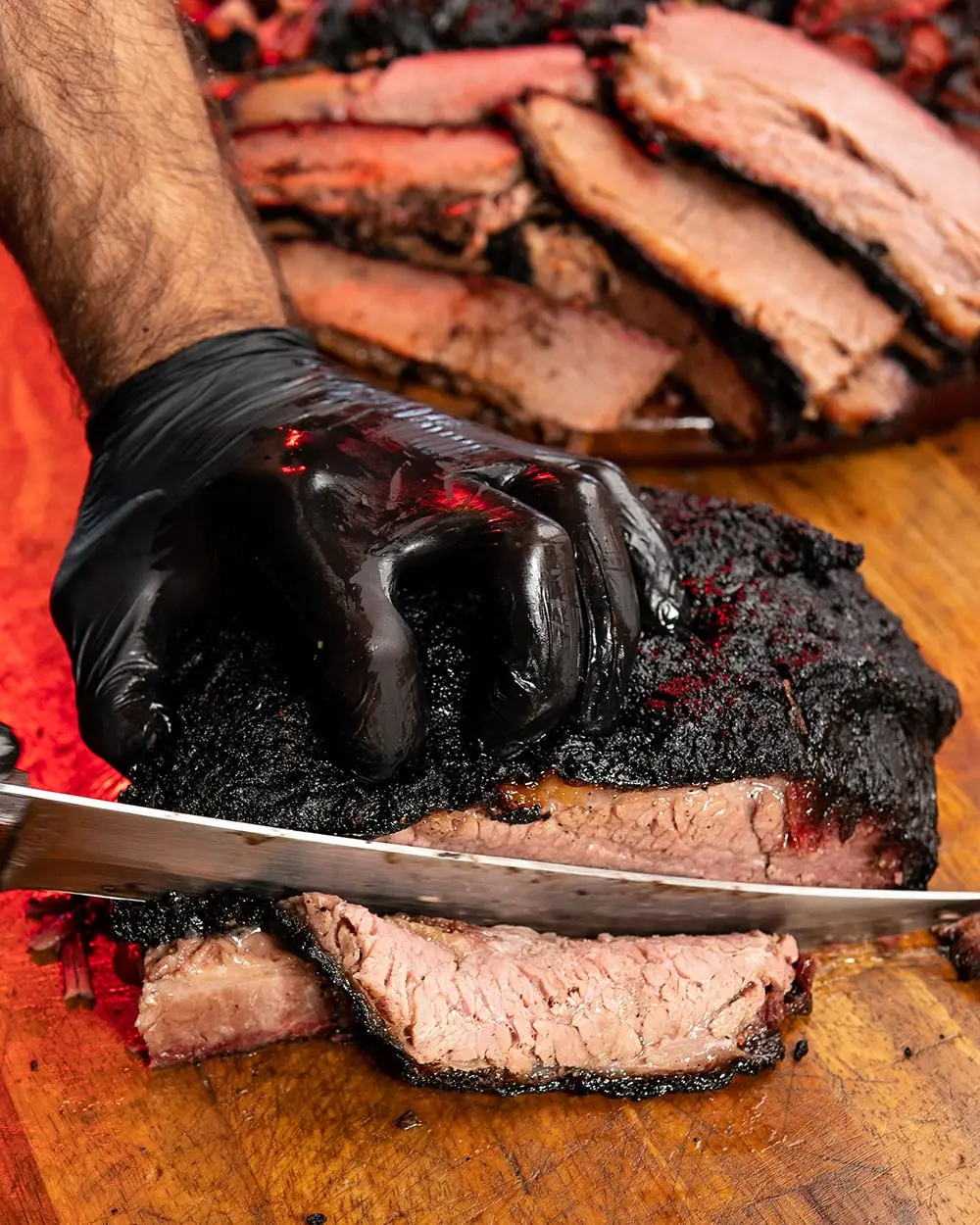
When researching smokers for brisket, ribs, or authentic Texas-style barbecue, two options dominate the conversation: offset smokers and pellet smokers. Both promise low-and-slow cooking and wood-fired flavor. But when the goal is true Texas BBQ — with proper bark, deep smoke penetration, and balanced tenderness — the differences between these systems become significant.
Backyard cooks across San Diego often ask which smoker produces better brisket. The honest answer is that “better” depends on what the cook values most: hands-on fire control and stronger smoke character, or convenience and repeatable temperatures with less effort. Understanding the mechanics behind each system also explains why traditional Texas barbecue restaurants still rely heavily on offset pits when the goal is bold, hardwood-driven flavor.
This guide breaks down offset smokers vs pellet smokers in practical terms: how each one burns fuel, how smoke flows through the cook chamber, what that means for bark and smoke ring development, and which pitfalls frustrate first-time smoker owners. If the end goal is brisket that tastes like Central Texas — not just “BBQ-ish” — the details matter.
Offset smokers are built around a simple idea: separate the fire from the food, then let clean heat and smoke travel across the meat before exiting a chimney. The fire burns in a dedicated firebox attached to the side of the cook chamber. Hardwood splits (often oak or mesquite for Texas-style barbecue) ignite over a coal bed, and the cook manages airflow using vents and dampers.
That airflow is the “engine” of an offset smoker. Oxygen intake affects combustion quality; combustion quality affects smoke density; smoke density affects flavor. When the fire is burning clean, the smoke is thin and blue-ish rather than thick and white. That clean burn is what creates deep smoke flavor without harsh bitterness. In other words, an offset doesn’t just cook meat — it teaches the cook how to run a fire.
Because offsets burn real wood, they can create big flavor fast, but they also punish inconsistency. If the cook adds cold wood too often, chokes airflow, or lets the coal bed collapse, temperatures swing and smoke quality degrades. That’s the trade: offsets reward skill and attention with stronger bark and richer smoke character, but they demand more time and experience than most first-time buyers expect.
Pellet smokers are designed for convenience and consistency. Instead of managing a live wood fire with splits and airflow, the user loads a hopper with compressed wood pellets. An electric auger feeds pellets into a burn pot at a rate controlled by a digital thermostat. A fan supplies oxygen and circulates heat through the cooking chamber, keeping temperatures relatively stable with minimal babysitting.
This design makes pellet smokers especially attractive to busy home cooks. Once preheated, many pellet smokers behave like an outdoor convection oven with a wood-smoke accent. For weeknight cooking, long overnight briskets, or backyard parties where the cook also wants to socialize, that “set temperature and go” workflow is a real benefit.
However, pellet convenience comes with a different smoke profile. Pellets burn in a small, controlled combustion area, and the smoke output is typically lighter and more uniform. Some people prefer that milder smoke because it’s harder to overdo. But if the goal is classic Texas brisket intensity — where smoke flavor is clearly present, bark is bold, and the meat tastes like it lived in a pit all day — the pellet profile can feel restrained.
When comparing offset smokers vs pellet smokers, the deciding factors are usually flavor development and texture — especially for brisket. Brisket is unforgiving: it needs steady heat, enough time for collagen to break down, and the right surface conditions to build bark. The smoker type influences all three.
Bark is the dark, textured crust that forms on the outside of brisket and ribs. In Texas BBQ, bark isn’t decoration — it’s a major part of the flavor. Bark forms through a combination of surface dehydration, smoke deposition, and browning reactions (including the Maillard reaction). The cook wants a surface that dries gradually while still receiving steady smoke exposure.
Offset smokers often excel here because a live wood fire can produce a stronger flow of smoke compounds and a humidity/heat environment that supports bark development over long cooks. When airflow is tuned correctly, brisket can develop that classic peppery, almost lacquered exterior that holds seasoning and concentrates flavor.
Pellet smokers can absolutely build bark, but it may be lighter in color and softer in texture depending on pellet type, chamber airflow, and the cooking temperature strategy. Many pellet users compensate by cooking a bit hotter, extending unwrapped time, or using a stronger rub. Those workarounds can improve bark — they just highlight that pellet systems often require “technique adjustments” to mimic what offsets naturally do.
The smoke ring is the pink layer just under the surface of smoked meat. It’s not a “taste meter,” but it is a visible sign of certain combustion chemistry happening during the early stage of a cook. The ring forms when gases produced during combustion interact with meat pigments before the surface fully sets.
Offset smokers often produce more dramatic smoke rings because burning hardwood splits can generate robust combustion gases and a stronger smoke environment early in the cook. Pellet smokers can still create smoke rings, but the ring’s intensity can vary depending on how the pellet system cycles heat and smoke output.
It’s worth repeating: smoke ring presence doesn’t automatically mean “better.” Brisket can taste incredible with a subtle ring, and a deep ring can still come with dry texture if the cook was rushed. The real performance metric is moisture, tenderness, and balanced smoke flavor that doesn’t overpower the beef.
Texas-style barbecue relies on smoke that tastes like real hardwood, not artificial “liquid smoke” notes. With an offset, the cook burns oak or mesquite splits and can adjust fire behavior to push stronger or lighter smoke depending on the meat and the moment. That flexibility is why offsets can produce layered smoke flavor: bold, but clean.
Pellet smokers produce real wood smoke too, but the smoke is usually milder and more consistent. For poultry, fish, or people who prefer lighter smoke, pellets can be a great fit. For brisket lovers chasing Central Texas intensity — where the smoke is clearly present but not bitter — the offset method often feels closer to the “benchmark” people have in mind when they say authentic Texas BBQ.
Convenience often drives the decision toward pellet smokers. It’s hard to argue with a controller that holds a steady temperature while the cook handles sides, guests, or a busy day. Offsets, by contrast, are a commitment. They ask for time, attention, and a willingness to learn. That doesn’t mean offsets are “better for everyone.” It means they’re better for cooks who want hands-on control and are chasing a very specific style of smoke and bark.
To make the trade-offs easy to scan, here’s a clear comparison. If someone is buying their first smoker, this table can help prevent the most common regret: purchasing a smoker that doesn’t match the cook’s patience, schedule, or flavor expectations.
| Feature | Offset Smoker | Pellet Smoker |
| Fuel Source | Hardwood logs (oak, mesquite) | Compressed wood pellets |
| Temperature Control | Manual airflow and fire management | Digital thermostat control |
| Smoke Intensity | Heavy, layered smoke | Mild to moderate smoke |
| Bark Development | Strong, dark bark | Lighter bark |
| Skill Requirement | High | Beginner-friendly |
| Authentic Texas BBQ Method | Traditional | Modern adaptation |
Many people don’t “fail” at smoking meat because they bought the wrong smoker. They struggle because they didn’t realize what the smoker demands. Offsets demand fire skill. Pellets demand process discipline (pellet quality, cleaning, and learning how the controller behaves). Below are three mistakes that cause the most frustration — and the most disappointing brisket.
Offset smokers demand attention. Temperature swings happen when airflow is choked, when the coal bed isn’t maintained, or when new splits are added in a way that smolders instead of burning clean. Those swings impact brisket texture because collagen breakdown and fat rendering depend on steady heat over time.
There’s also a safety side to consistency. Smoked meats still need to be cooked and handled safely. The USDA Food Safety and Inspection Service provides guidelines for safe cooking and reheating temperatures and general food safety practices.
Pellet smokers simplify temperature control, but a stable number on a screen doesn’t automatically create bold smoke flavor. Pellet quality matters. Moist pellets can burn poorly and produce weaker smoke. A dirty burn pot can affect combustion and heat recovery. Even weather can matter — coastal humidity and wind in San Diego can change how often the auger feeds pellets and how quickly the cooker holds temp.
Automation reduces effort, but it doesn’t eliminate fundamentals. A pellet cooker still benefits from good placement of the meat, smart timing on wrapping, and a rest period long enough to stabilize juices. When new owners treat pellets like a magic shortcut, results often come out “fine” — but not unforgettable.
Brisket is a demanding cut. It needs long cook times, enough heat stability to render fat, and the right smoke environment to develop bark without drying out the flat. Many beginners buy a pellet smoker expecting restaurant-level bark without realizing that different combustion systems produce different smoke density and different surface behavior.
This doesn’t mean brisket can’t be great on pellets — it can. It means the cook should choose the smoker that matches the desired outcome. If someone wants bold, classic Texas brisket character with a deep bark and strong hardwood presence, offsets are often the most direct path to that specific result.
Across Central Texas, many iconic barbecue restaurants rely on offset smokers fueled by hardwood like oak and mesquite. The reason is simple: when a pit is run well, the cook can control smoke density and airflow in real time. That control produces consistent bark, clean smoke flavor, and properly rendered fat — the three traits most people associate with authentic Texas brisket.
In San Diego, authentic Texas-style barbecue requires the same discipline. At Abbey’s Texas BBQ, located at 6904 Miramar Road in San Diego’s 92121 business district, meats are slow-smoked in cast iron smokers fueled by green oak and mesquite. Brisket and pork shoulder cook for 18 to 24 hours to develop bark, tenderness, and depth of flavor — without leaning on heavy sauce to do the work.
That location is convenient for guests coming from Mira Mesa, Scripps Ranch, University City, and Kearny Mesa, especially with quick access from I-15 and I-805. For many locals, reading about smoker types becomes more than a gear discussion — it becomes a way to understand why one brisket tastes lightly smoky while another has that deeper, unmistakable hardwood signature.
Is an offset smoker better than a pellet smoker?
An offset smoker is often better for cooks who want stronger smoke character, more aggressive bark, and a more traditional Texas-style process. A pellet smoker is often better for cooks who prioritize ease of use and stable temperatures with less time spent managing a live fire. “Better” depends on the cook’s goals and schedule.
Do Texas BBQ restaurants use pellet smokers?
Some restaurants use pellet systems for certain items or for convenience, but many traditional Central Texas-style barbecue operations rely on offset pits fueled by hardwood. The offset approach is closely tied to the classic smoke profile and bark that define Texas brisket culture.
Which smoker is best for brisket?
Brisket benefits from steady heat, enough time for collagen breakdown, and a smoke environment that supports bark formation. Offsets often excel for classic Texas brisket because hardwood combustion and airflow control can produce deeper smoke flavor and stronger bark. Pellet smokers can still make great brisket, especially when the cook adjusts technique to maximize smoke exposure and bark setting.
Do pellet smokers produce real smoke flavor?
Yes, pellet smokers produce real wood smoke because pellets are compressed hardwood. The most common difference is intensity: pellet smoke is typically lighter and more uniform, while offset smoke can be bolder and more layered depending on fire management and wood type.
Learning smoker types is useful because it sets expectations. Offsets can produce that bold, unmistakable Texas smoke profile, but they demand time, patience, and disciplined fire control. Pellet smokers make long cooks more accessible, but the smoke character is often lighter and may require technique tweaks to reach the same bark and intensity people associate with classic brisket.
For anyone in San Diego who wants to taste what traditional hardwood smoking is supposed to be — without sourcing wood splits, managing airflow all day, or staying up overnight to babysit a fire — authentic Texas-style barbecue is available locally.
Abbey’s Texas BBQ
6904 Miramar Road
San Diego, CA 92121
(858) 566-2333


