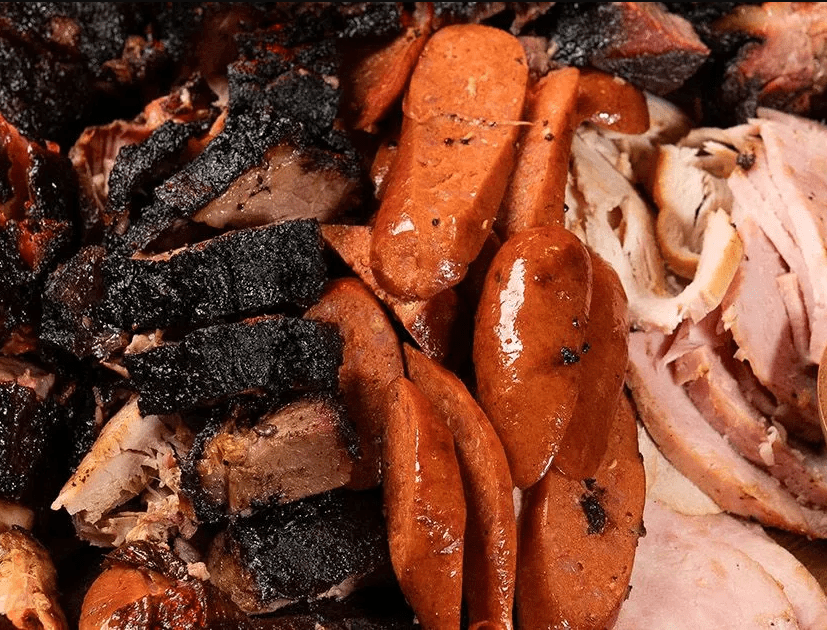
Smoked sausage and hot links are both hardwood-smoked meats, but they differ in seasoning, heat level, and sometimes grind texture. Traditional smoked sausage focuses on balanced salt, black pepper, and garlic with a firm snap and juicy interior. Hot links include a heavier dose of chili pepper and spice, delivering noticeable heat while maintaining proper smoke integration. In Texas-style barbecue, both are cooked low and steady over hardwood so the fat renders gradually and the casing tightens without bursting.
Sausage often sits beside brisket and ribs without drawing attention, but in a serious Texas barbecue program, it reveals almost everything about the pit and the butcher. Sausage tests meat selection, grind consistency, fat ratio, seasoning restraint, casing quality, and fire control in a way few other items do.
You can hide a brisket mistake with slicing technique. You cannot hide a bad sausage. When you cut into a link, the structure is exposed immediately—either it holds together with moisture and snap, or it crumbles, leaks, or tastes muddy from heavy smoke.
Smoked sausage in the Texas tradition is usually a coarse-ground blend of beef, or beef and pork, seasoned simply and stuffed into natural casings. The classic flavor leans on salt, cracked black pepper, and garlic. The goal is balance, not heat, and the sausage should taste like meat first, then smoke, then seasoning.
Fat percentage matters more than most people realize. Many well-made Texas links land around 25–30% fat. Too lean and the sausage dries out quickly if the pit runs hot. Too fatty and the link turns greasy, with rendered fat leaking out rather than staying suspended inside the filling.
The casing is not just packaging. It is structure. Natural casings shrink as they cook, tightening around the filling. When the cook is controlled correctly, you get a clean snap, followed by a juicy interior that stays cohesive instead of falling apart.
Hot links share the same foundation as smoked sausage—ground meat, deliberate fat ratio, and natural casings—but they shift the seasoning profile toward noticeable heat. The spice blend commonly includes crushed red pepper, cayenne, paprika, and sometimes chili powder, depending on the shop’s style.
The heat should be present without erasing the meat. Good hot links deliver warmth that builds rather than spikes. You taste beef, smoke, and rendered fat first, then the pepper bloom arrives on the finish. If the first impression is pure burn, it often signals weak meat, imbalance, or sloppy smoke.
Hot links are less forgiving with smoke because spice amplifies perception. Heavy smoke can clash with chili heat quickly, and dirty combustion stacks bitterness on top of the spice. That is why clean fire management matters even more with hot links than with mild sausage.
| Feature | Smoked Sausage | Hot Links |
|---|---|---|
| Heat Level | Mild to moderate | Noticeably spicy |
| Seasoning Focus | Salt, pepper, garlic | Chili pepper, paprika, cayenne |
| Grind Texture | Coarse traditional grind | Coarse or slightly finer |
| Smoke Integration | Balanced, clean oak profile | Clean smoke is essential to avoid bitterness |
| Bite | Firm snap, juicy interior | Firm snap, juicy with warming finish |
Sausage texture is built on fat behavior. During low-and-slow smoking, fat begins to soften and render in the 130–150°F range. The goal is controlled rendering where fat softens and stays integrated with the meat rather than draining out through the casing.
If the pit runs too hot, fat liquefies too quickly and escapes, leaving the interior dry and crumbly even if the outside looks finished. If the pit runs too cool, fat stays solid and the sausage eats dense and pasty, like the filling never relaxed.
In an offset smoker burning hardwood, steady airflow keeps the chamber in a stable window so fat can soften gradually and redistribute. When you slice a properly smoked link, you should not see pools of grease. You should see moisture suspended in the meat matrix: juicy, cohesive, and clean.
Sausage demands attention in a live-fire pit. Unlike brisket, which benefits from long stretches of stable heat, sausage reacts quickly to temperature swings. A link can go from perfect to split casing in a short window if the fire spikes or airflow changes suddenly.
On a brisket cook, sausage typically goes on later when the coal bed is predictable and airflow is smooth. Pit thickness matters here. Smokers with heavy construction—especially cast iron—hold heat more evenly and reduce sudden spikes that can burst casings before the interior is ready.
You learn to watch the surface. Early on, the casing looks pale and soft. As smoke adheres and heat rises gradually, color deepens into a reddish brown. If blistering or wrinkling appears too early, it often means the chamber is running hot or the link is sitting in a harsh zone.
Smoke does more than add aroma. It lightly dries the surface, firms the casing, and interacts with fat. Oak tends to produce steady, moderate smoke that lays down even color over time. Mesquite burns hotter and can intensify quickly, which means it must be managed carefully—especially with hot links where spice can magnify harshness.
Clean smoke should be thin and blue, not heavy and white. Heavy smoke clings bitterly to casings and dulls the nuance of pepper, garlic, and chili. Proper smoke enhances pepper sharpness, garlic warmth, chili depth, and beef richness. Improper smoke flattens everything into one harsh note.
Smoked sausage is the balanced choice. It pairs naturally with brisket, ribs, and sides without competing for attention. It is meat-forward, steady, and dependable, which is why it belongs on nearly every Texas tray.
Hot links are the contrast move. They cut through fatty brisket and bring warmth to the plate. The heat resets the palate and keeps bites dynamic, especially when the tray is rich and smoke-forward.
Many traditional Texas trays include both. Mild sausage anchors the meal. Hot links add lift.
Texas barbecue sausage carries strong Central European influence, especially from German and Czech meat markets that helped shape early smokehouse culture. Over time, seasoning stayed meat-forward, and offset pits made smoke integration a defining feature.
Even hot links are expected to maintain structure and balance rather than chase extreme heat. The goal is depth: beef, fat, spice, and hardwood smoke working together in one bite.
At Abbey’s Real Texas BBQ, sausage reflects that lineage. Green oak provides steady burn and clean smoke, mesquite adds intensity in balance, and hand-built cast iron smokers help keep heat stable so casings tighten slowly without bursting.
Smoked sausage and hot links may look similar on the tray, but they serve different roles. Smoked sausage delivers balance and classic pepper-garlic depth. Hot links bring spice that cuts through rich brisket and ribs. Both depend on the same fundamentals: proper fat ratio, casing integrity, and clean hardwood combustion.
At Abbey’s Real Texas BBQ, sausage and hot links are smoked low and steady over green oak and mesquite in hand-built cast iron smokers brought from Texas. The approach is patient and traditional—clean fire, controlled airflow, and careful timing so the casing snaps and the interior stays juicy without excess grease.
📍 Location: 6904 Miramar Road, San Diego
Serving guests from Mira Mesa, University City, and La Jolla


