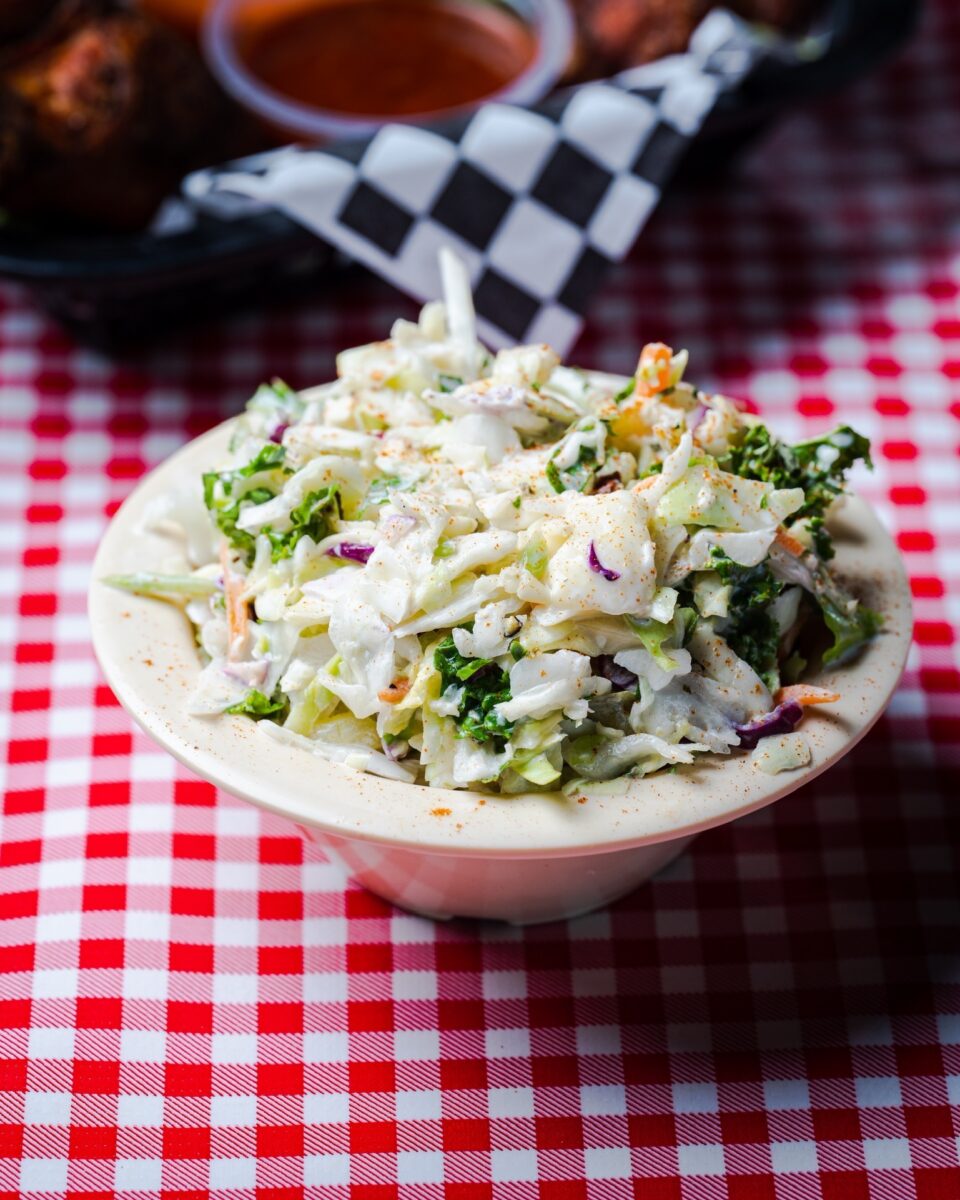
Traditional Texas BBQ sides are simple, hearty dishes designed to balance slow-smoked meats. The most common include pinto beans, potato salad, coleslaw, mac and cheese, white bread, pickles, and onions. These sides are not meant to compete with brisket or ribs. Instead, they cool the palate, absorb rendered juices, and provide contrast to the deep smoke and fat of hardwood-cooked meats.
Texas barbecue is built around the pit. The meat carries the smoke, the bark, and the long hours of fire management. Sides exist to support that experience, not to steal focus from it.
When brisket is smoked for 18–24 hours over oak and mesquite, it develops richness from rendered fat and collagen. Beef ribs bring depth. Sausage delivers snap and spice. Without contrast, the meal turns heavy fast. Traditional sides introduce balance through acidity, creaminess, starch, crunch, and just enough brightness to reset your mouth between bites.
Traditional Texas BBQ sides share a few traits that show up again and again across classic smokehouses and meat markets. They are practical foods built to move quickly across a counter, hold up on a tray, and pair with beef that has been exposed to hardwood fire for an entire day.
Unlike some regional barbecue traditions that lean into sweeter baked casseroles or sauce-driven sides, Texas tends to keep things straightforward. Even when a side is creamy or cheesy, it is meant to calm the palate and support the meat rather than distract from it.
A good Texas side does three things. It absorbs juices, it refreshes the mouth, and it gives the tray a rhythm so the richness of brisket stays enjoyable from the first bite to the last.
Pinto beans are one of the most traditional Texas barbecue sides, and they are traditional for a reason. They belong on a brisket tray the way smoke belongs in the pit, because they match the pace and flavor of slow-cooked beef.
Texas-style pinto beans are typically cooked with onions, salt, black pepper, and sometimes brisket trimmings or drippings. The goal is not sweetness. The goal is a savory, steady flavor that feels like the smokehouse itself.
On the plate, beans do important work. When brisket juices mix into the bowl, smoky fat enriches the broth and turns a simple side into something layered. Beans also stretch a meal without making it feel heavier, which matters when brisket point and beef ribs already bring richness.
Potato salad is the quiet workhorse of the Texas tray. It does not need to be dramatic because its job is functional: it cuts through richness without fighting smoke.
Texas BBQ potato salad is often mustard-based rather than sweet. The potatoes stay tender but structured, coated in dressing that commonly includes mustard, mayonnaise, vinegar, salt, and black pepper, sometimes with onion or relish for brightness.
The acidity matters. After a bite of brisket point, where rendered fat can coat the mouth, mustard and vinegar reset the palate. The starch absorbs juices while the tang keeps the next bite feeling fresh instead of heavy.
Coleslaw brings something smoked meat cannot: crunch. In a meal dominated by collagen, rendered fat, and tender slices, slaw adds a crisp bite that keeps the tray from feeling one-note.
Texas-style slaw usually avoids excessive sugar. Whether it is vinegar-forward or lightly creamy, the goal is brightness and balance. The cabbage should stay crisp, and the dressing should lift the vegetables instead of burying them.
A forkful of slaw between bites of beef ribs acts like a reset button. Acidity cuts through fat, crunch breaks up softness, and the mild vegetable flavor keeps the meat feeling like the centerpiece.
Mac and cheese appears on many Texas barbecue menus, but it plays a different role than beans or slaw. It does not refresh the palate. It adds comfort and softness alongside smoky, peppery meat.
Done well, mac and cheese provides a mild, creamy contrast to bark and smoke. Done poorly, it becomes the loudest thing on the tray and competes with brisket instead of supporting it.
The best smokehouse mac and cheese is creamy without being overly sharp. The sauce stays smooth and balanced, and the flavor remains gentle enough that brisket still dominates the plate.
These may look like extras, but in Texas barbecue they are functional tools. They are not here to decorate the tray. They are here to manage richness and keep the meal balanced across multiple bites of fatty meat.
White bread is intentionally plain. It soaks up brisket juices and rendered fat, and it gives you a neutral bite when your palate needs a break. It is not artisanal. It is practical, and that practicality is part of Texas BBQ culture.
Pickles bring sharp acidity that cuts fat instantly. One bite after brisket point clears the mouth and makes the next slice taste brighter. Raw onions add crunch and a sharp bite that pairs especially well with beef, helping keep rich meat from tasting flat as the tray goes on.
When brisket is managed overnight, the final meat becomes deep and layered. Collagen breaks down, fat renders, bark sets, and smoke integrates into the surface and the meat itself. The result is powerful flavor, but that richness stacks on the palate.
After a few bites of brisket point, fat can coat the mouth and smoke can linger. That is where sides step in and keep the meal enjoyable all the way through. Beans carry drippings in a softer form. Mustard potato salad clears heaviness. Slaw adds crunch and lift. A pickle cuts straight through and resets everything in one bite.
Sides are not filler. They are pacing tools. They let you keep enjoying the meat without palate fatigue, which is exactly why the classics have stayed the classics in Texas barbecue.
Traditional Texas barbecue developed in small-town markets where meat was sold by weight and the pit was the centerpiece. Sides were prepared in practical quantities, served fast, and designed to make smoked beef taste even better.
That legacy still guides serious smokehouses today. The focus stays on hardwood fire, clean combustion, and meat that earns tenderness through time. The sides exist to keep that experience balanced, not to distract from what came off the pit.
At Abbey’s Real Texas BBQ, we keep the same philosophy. The meat leads, and the sides are built to support the smoke, the bark, and the richness that comes from long cooks over hardwood.
Traditional Texas BBQ sides may look simple, but they are one of the reasons a brisket tray works. Beans absorb drippings, potato salad cuts richness, slaw adds crunch, and pickles reset the palate. Each item plays a role in keeping slow-smoked meat enjoyable from the first bite through the last.
At Abbey’s Real Texas BBQ, brisket and pork shoulder are smoked 18–24 hours over green oak and mesquite in traditional cast iron smokers. Our sides are prepared to complement that hardwood process—steady, balanced, and rooted in Texas tradition.
📍 Location: 6904 Miramar Road, San Diego
Serving guests from Mira Mesa, University City, and La Jolla


