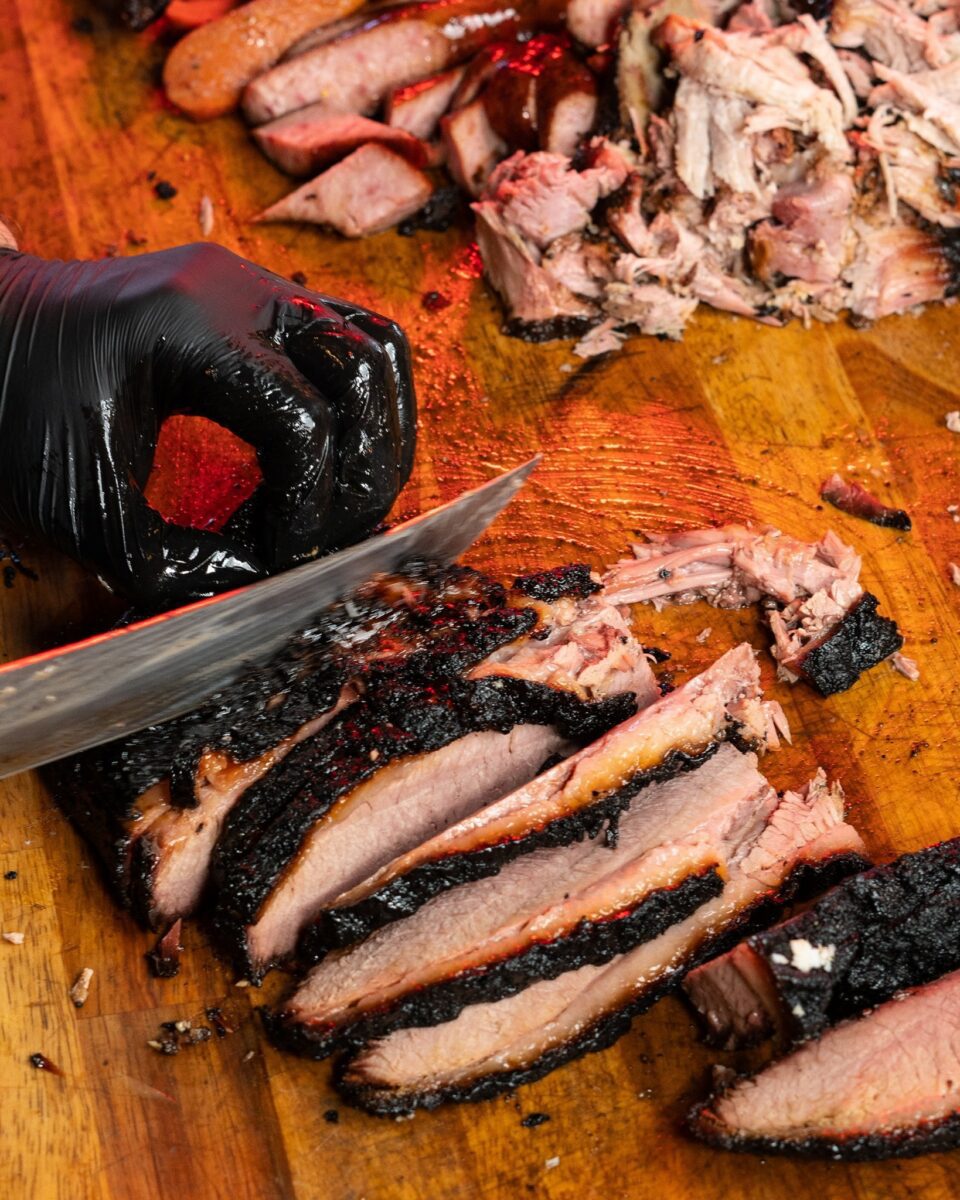
Texas BBQ focuses on beef because of the state’s deep cattle ranching history, the availability of affordable working cuts like brisket, and the way hardwood smoking transforms tough beef muscles into tender slices. While pork and sausage are present, beef—especially brisket and beef ribs—became the foundation of Texas barbecue due to regional agriculture, butcher traditions, and pit designs built to handle large, collagen-rich cuts over long cook times.
Barbecue traditions develop around geography. In Texas, that geography favored cattle. Long before offset smokers became iconic, ranching shaped what was available, what was affordable, and what local meat markets needed to turn into food people would actually line up for.
Over time, pit design, seasoning habits, service style, and cook timelines evolved around that simple reality. Texas barbecue didn’t reject pork. It just grew up around cattle, and beef became the cut that the entire system was designed to cook well.
Texas has one of the longest-running cattle ranching histories in the United States. Large herds required processing, and butchers needed practical ways to use every part of the animal. Premium cuts sold quickly. Tougher muscles did not, especially before modern refrigeration and supply chains made distribution easier.
That is where barbecue enters the story. Slow cooking over hardwood was not only about flavor. It was a method of turning working cuts into something tender, valuable, and worth serving. Smoke and time became tools of transformation, making overlooked beef cuts the most desired items on the menu.
In regions where hog farming dominated, pork naturally became the focus. In Texas, beef was more plentiful, and barbecue reflects that origin in every slice served.
If one cut explains why Texas barbecue centers on beef, it is brisket. Brisket comes from the lower chest of the steer, a muscle group built to support weight. Because it works hard, it is dense with collagen and connective tissue. Raw brisket is tough for the same reason a working muscle is strong: it was built to do a job.
A whole packer brisket includes the flat and the point, and both sections respond to long, steady heat in a way few other cuts do. Over an 18–24 hour cook, collagen converts into gelatin and fat slowly renders, turning structure into tenderness. The result is not shredded meat. It is sliceable, supple beef that still holds together cleanly.
This is where Texas stands apart. Instead of relying on sauce to carry the experience, Texas brisket is sliced against the grain with bark intact. The outside builds a peppery crust from smoke, seasoning, and rendered fat. The interior stays moist and elastic when the fire is managed correctly.
Beef plate ribs reinforce the beef-forward approach even further. These ribs are thick, heavily marbled, and built for long cooks. Like brisket, they contain significant connective tissue that benefits from extended smoke exposure. When cooked properly, they develop deep bark and a gelatin-rich interior that feels rich without becoming greasy.
The size of beef ribs also shaped Texas pit design. Offset smokers needed enough space to handle large briskets and full rib plates. Once pits scaled to support big beef cuts, the tradition became self-reinforcing. The equipment was built around beef, and the menu followed the equipment.
In that sense, pit culture and cattle culture moved together. Beef did not just become popular in Texas barbecue. It became the cut the entire system was designed to cook consistently.
Texas barbecue leans toward beef because beef carries bold natural flavor and holds up under smoke without needing heavy sauce. That is why the classic seasoning approach stays minimal: salt and coarse black pepper, sometimes with a light supporting role from garlic or other spices.
In many pork-centered traditions, sauce plays a central role. In Texas barbecue, sauce is usually served on the side. The focus stays on the meat, the smoke, and the bark, not on covering the cut with a dominant flavor.
Beef responds well to that restraint. Pepper bark complements rendered fat. Oak smoke deepens beef flavor rather than competing with it. The simplicity became part of the identity: let the meat speak, let the wood support, and let the knife reveal the finished texture.
Texas barbecue relies heavily on hardwoods such as oak and mesquite. These woods burn hot and steady when managed correctly, producing the clean combustion needed for long cooks. Beef’s density pairs naturally with these fuels because it can absorb smoke gradually without becoming overwhelmed.
Mesquite is especially influential. It produces a strong smoke profile that can overpower lighter meats if used carelessly, but beef can carry it more gracefully—especially when balanced with oak and kept clean through proper airflow.
Offset smokers move heat and smoke indirectly across the meat. When pits are built from thick steel or cast iron, temperature swings are softened, supporting overnight cooks where collagen needs time to convert and fat needs time to render without scorching the surface.
Cooking beef well requires stable combustion. During an overnight brisket cook, airflow adjustments must be small and deliberate. Too much oxygen raises chamber temperature quickly and can tighten the flat. Too little oxygen produces dirty smoke that clings bitterly to rendered fat.
Beef shows mistakes quickly. The flat can dry if the pit runs hot. Bark can turn harsh if smoke becomes heavy. If the fire runs too cool for too long, collagen conversion slows, leaving meat technically “done” by temperature but still tight by texture.
This is why beef became a badge of pit skill in Texas barbecue culture. Mastering brisket and beef ribs requires clean combustion, steady heat, and disciplined patience over long hours.
Texas meat markets historically served sliced beef on butcher paper. Customers ordered by weight, and sauce was optional. This format reinforced beef dominance because brisket slices cleanly, beef ribs hold structure, and sausage fits neatly into a by-the-pound service style.
Pork shoulder, which naturally shreds, did not align as neatly with a sliced-by-the-pound identity. Pork remains present across Texas, but brisket stayed the centerpiece. The market format shaped the tradition, and the tradition reinforced the market format.
Beef became the meat that matched both the pit and the counter: large cuts, long cooks, and slicing to order.
Texas barbecue is not exclusively beef. Sausage remains essential, shaped by Central European influence across the state. Pork ribs and pork shoulder appear on many menus and can be excellent when cooked with clean smoke and proper timing.
The difference is emphasis. In Texas, beef defines the identity and pork complements it. Even many sausage programs lean beef-forward or use beef-pork blends, keeping the smokehouse core anchored in cattle tradition.
Texas barbecue trays often include pork and sausage, but brisket and beef ribs remain the anchor cuts that define the style.
Texas barbecue rests on cattle ranching, butcher practicality, and pit craftsmanship. Tough working cuts like brisket became valuable once hardwood smoking proved capable of transforming collagen into tenderness. Over time, pits were built to handle large beef cuts, seasoning stayed simple to highlight meat flavor, and service evolved around slicing to order.
Beef remains central not because of trend, but because the method was built around it. The cattle came first. The pits followed. The tradition holds because it works.
At Abbey’s Real Texas BBQ, that lineage continues through steady long cooks fueled by green oak and mesquite and the discipline required to keep smoke clean from start to finish.
If you want to understand Texas barbecue, start with brisket. Its transformation from tough working muscle to tender, sliceable meat captures the entire philosophy of the tradition. Add beef ribs for depth and richness, and let pork and sausage round out the tray while beef remains the anchor.
At Abbey’s Real Texas BBQ, brisket and beef ribs are smoked 18–24 hours over green oak and mesquite in hand-built cast iron smokers brought from Texas. The method stays steady and traditional—clean combustion, disciplined airflow, and the patience required for beef to fully transform.
📍 Location: 6904 Miramar Road, San Diego
Serving guests from Mira Mesa, University City, and La Jolla


